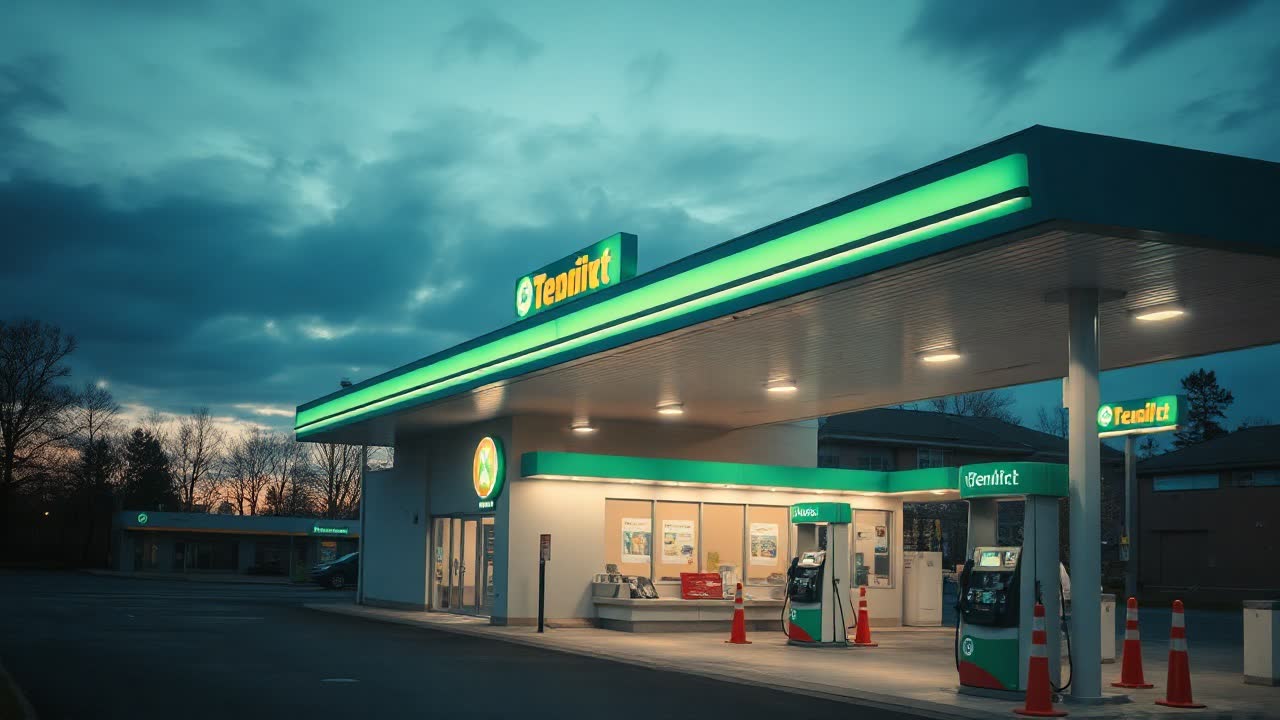
Industry solution
Security systems for petrol stations and oil depots
Security for petrol and gas stations and oil depots: CCTV of pumps, cash desk and unloading area, license plate recognition, perimeter protection and explosion-proof fire alarm systems.
What's included
Scope of work
- Design that accounts for hazardous zones
- CCTV of pumps, cash desk and unloading area
- License plate recognition and visit logging
- Perimeter protection and site control
- Fire alarm and maintenance
Security systems for fuel stations and terminals
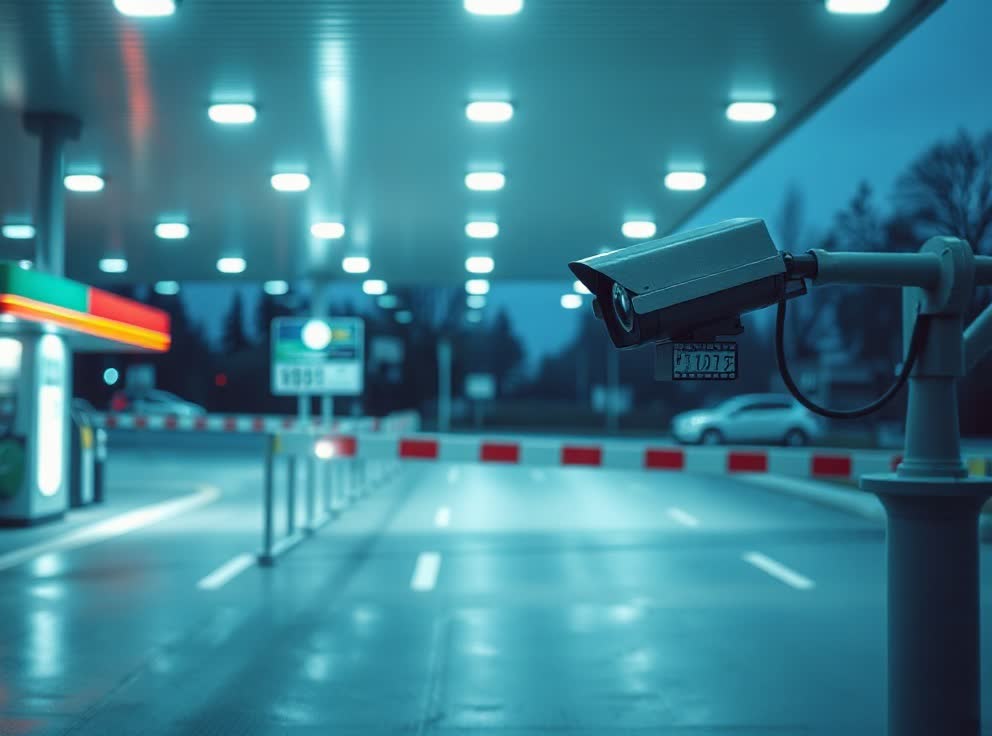
At a fuel station CCTV solves three tasks at once: control of fuel dispensing at the pumps, checkout discipline in the station shop and capture of vehicle plates at entry and exit. Pump cameras are placed so the frame holds both the refueling car and its plate — that closes payment disputes and drive-offs. Plate recognition links the pump event to the receipt and to the entry recording.
Safety requirements on a fuel site are stricter than usual: equipment and its placement are chosen with the explosion-hazard zone in mind, cable routes and power follow the design, and the fire alarm with voice notification is designed for the site's purpose and handed to the supervising authorities. This is not a site where a system can be assembled 'as it goes' — the design defines the composition and rating of the equipment.
We build fuel stations end to end: CCTV by zone (pumps, checkout, tank farm, perimeter), access control to service rooms, fire alarm, operator communications and an archive of the right depth. For station networks we set up unified access: the manager sees all stations in one interface instead of logging into each. We maintain the system under contract across Uzbekistan.
Typical solutions
Three typical fuel station solutions
Every site is priced individually: describe the task or send a plan — we will return a quote with an exact estimate within one business day.
A single station
Petrol or CNG station
- Cameras for pumps, checkout, entrance
- ANPR with a receipt–car link
- Equipment by explosion-hazard zone
- Installation without stopping sales
Time: 1–2 weeks
Station + perimeter
A station with a tank farm
- Control of the fuel offloading pad
- A perimeter with night analytics
- Access control for staff rooms
- A panic button to the station
Time: 2–4 weeks
A station chain
A chain across the country
- A standard station design
- Centralized monitoring from the office
- Entry reports across the chain
- A single service contract
Time: a station in 1–2 weeks
How we work
From request to a controlled station — 5 steps
Station walkthrough
hazard zones, pumps, checkout — free
A zoned design
the zone class sets the equipment rating
Agreement with the chain
a work schedule with operations
Installation without stopping sales
minimum-traffic windows
Handover and monitoring
for chains — every station from the office
Equipment
Equipment for fuel sites
Explosion-proof cameras for hazardous zones, Hikvision/Dahua ANPR, fire systems — per design:
Site specifics
Above the pumps and by the tanks explosion-protection rules apply: an ordinary camera cannot go there. We design placement by explosion-hazard zone classes and use suitably rated equipment.
Fuel-station disputes are drive-offs and till discrepancies. We link entrance plate recognition with the pump and checkout cameras: an incident assembles into an event chain in a minute.
Receiving a tanker is the operation with the highest loss risk. We cover the offloading pad separately, recording the tanker's plate and the operation time.
How we run the project
- 1Design by explosion-hazard zones
We classify the station's zones, select equipment ratings and route cables outside the hazardous areas, and agree the design with the chain's operations team.
- 2Installation without stopping sales
The station keeps dispensing fuel: work above the pumps goes into minimum-traffic hours, power tie-ins into agreed windows.
- 3ANPR and entry records
We configure plate recognition, stop-lists of problem vehicles and entry reports for reconciliation with shift reports.
- 4Rollout to the chain
For station chains we make a standard station design and centralized monitoring of all sites from the office.
Challenges and how we solve them
Canopy cameras catch vibration from wind and passing trucks. We use rigid brackets with dampers and check focus after the first weeks of operation.
The bright canopy and headlights overexpose the frame. We install wide-dynamic-range cameras and set exposure by the pump zone, not the frame average.
The car wash and winter chemicals foul camera domes fast. We put cleaning into the service schedule — at a fuel station it is a matter of weeks, not months.
SAT Solutions
Specialist services for this industry
Why large sites trust us
The term depends on the equipment and contract terms. Warranty call-out within one business day.
We work directly with H3C, Hikvision and Dahua: genuine equipment, stock in Tashkent, warranty replacement.
Designers and installers are in-house, not subcontractors. We work across Uzbekistan.
We work with companies and public sector clients: contract, specification, acts, invoices, handover by project.
Among our clients
Companies and organizations we have designed and installed security systems for.
 warehouses and 100+ pickup points
 control room video wall
 plant: access control and 67 km of cabling
 residential complex security
 body-worn camera surveillance
 48 Dahua cameras and access control
Examples
Gallery
Examples
Completed projects
Questions & answers