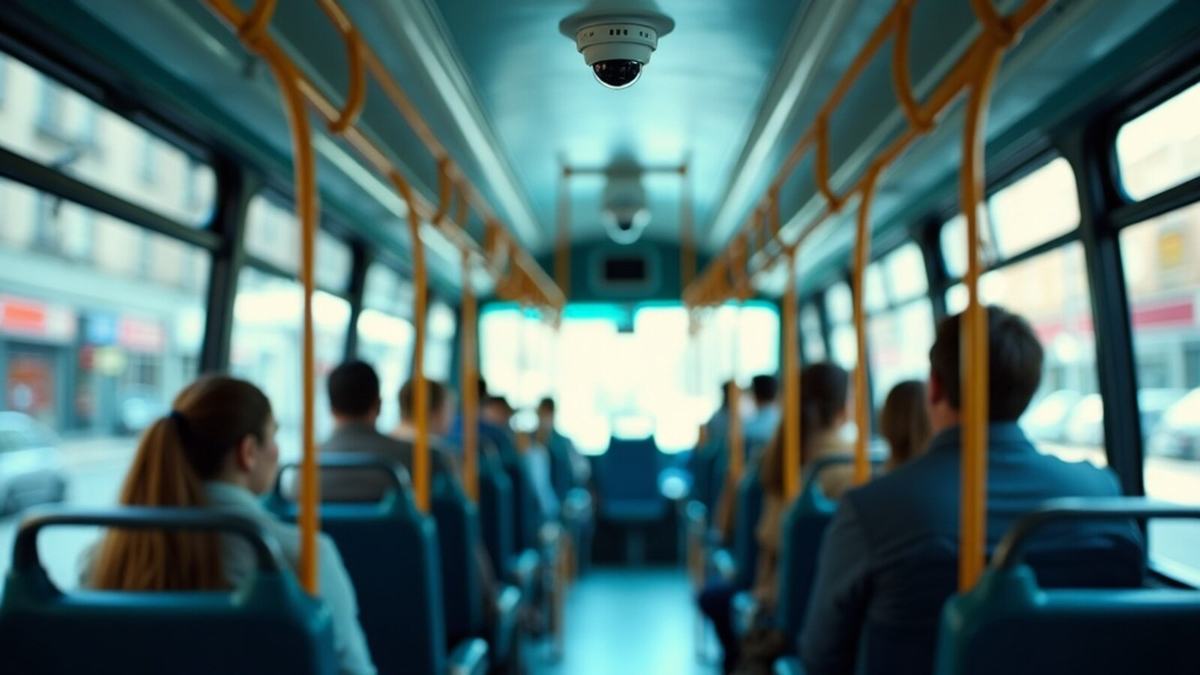
Industry solution
CCTV and monitoring for public transport
A package for public transport: in-cabin surveillance, GPS monitoring, passenger counting and data transmission to the dispatch center over 4G.
What's included
Scope of work
- Selection of mobile DVR and cameras
- Installation in cabin and driver area
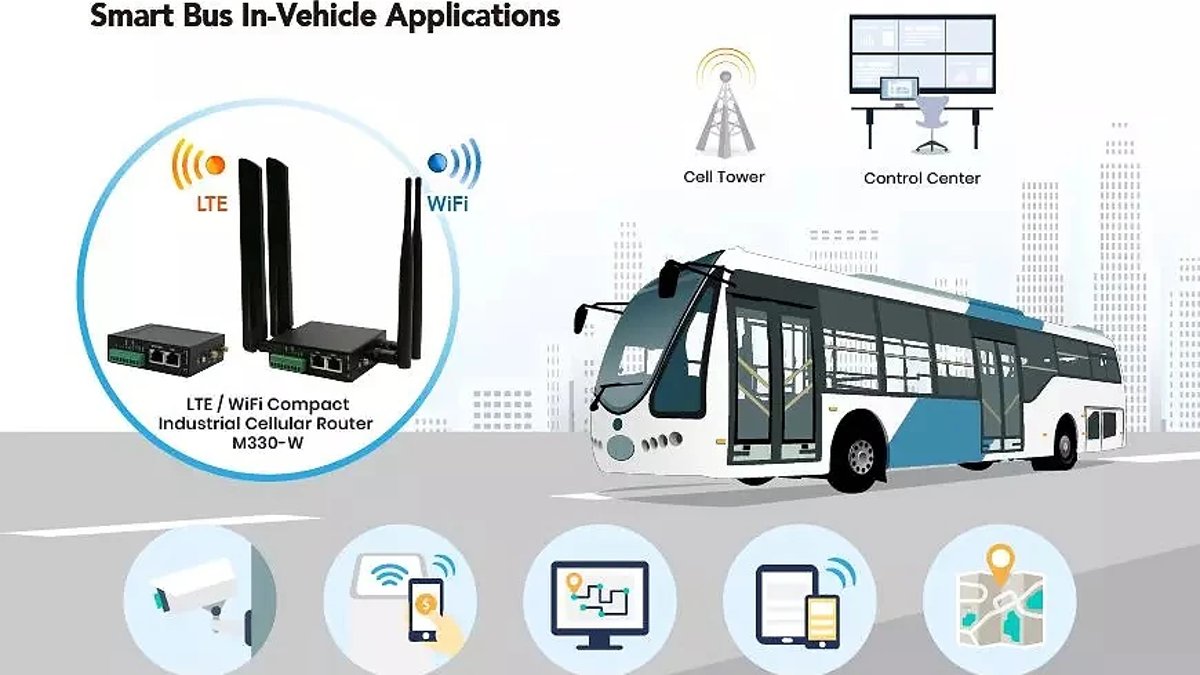
- GPS tracking and 4G/Wi-Fi connectivity
- Passenger counting and video analytics
- Connection to dispatch center
Typical solutions
Three typical transport solutions
Every site is priced individually: describe the task or send a plan — we will return a quote with an exact estimate within one business day.
Cabin video recording
Bus, minibus, taxi fleet
- Transport-rated cabin and road cameras
- A recorder with power protection
- A local archive per shift
- The driver's panic button
Time: 1 day per vehicle
Online fleet monitoring
Fleet, carrier
- 4G transfer to the dispatch office
- Location and video on demand
- Archive upload over depot Wi-Fi
- Buffering in no-coverage zones
Time: 2–3 days per vehicle
A fleet with analytics
City carrier, logistics
- Passenger counting by door
- Reports by trip and stop
- Driver fatigue monitoring (DSM)
- A 2–3 vehicle pilot before rollout
Time: per design
How we work
From pilot to an equipped fleet — 5 steps
Vehicle and depot walkthrough
vehicle types, inter-shift windows — free
A 2–3 vehicle pilot
a month of connectivity and vibration stats
Kit adjustment
mounts and settings from the pilot's results
Fleet rollout
a vehicle per day, no schedule drop-outs
Dispatch and service
monitoring, checks at maintenance
Equipment
Transport-rated equipment
Transport recorders and cameras with power protection, passenger counting sensors, 4G modems — per design:
Site specifics
Transport means constant shaking and onboard voltage spikes. We use transport-rated recorders and cameras with power protection: ordinary stationary gear does not live long on a bus.
Video and telemetry go to dispatch over 4G; the full archive uploads over Wi-Fi at the depot. We split the flows so the whole archive is not paid for as mobile traffic.
Door sensors count boarding and alighting — dispatch and route planning receive passenger-flow data by trip and stop.
How we run the project
- 1A pilot on a few vehicles
We equip 2–3 buses, collect a month of statistics on connectivity and vibration resistance, adjust mounts and settings — and only then roll out to the fleet.
- 2Installation at the depot
Equipping a vehicle takes a day: we work in the inter-shift windows and the bus does not drop out of the schedule.
- 3The dispatch office
We deploy monitoring: location, video on demand, alarm events from the driver.
- 4Fleet support
Scheduled checks at vehicle maintenance: mounts, lens cleanliness, archive upload.
Challenges and how we solve them
Overnight parking drains the battery if the recorder does not manage power. We configure proper sleep and deep-discharge protection.
On intercity routes the link drops. We buffer data on board and send it once the network returns — the dispatcher sees an unbroken track.
Body-mounted cameras must survive pressure washing. We take high-ingress-protection models and check gland sealing at the scheduled services.
Why large sites trust us
The term depends on the equipment and contract terms. Warranty call-out within one business day.
We work directly with H3C, Hikvision and Dahua: genuine equipment, stock in Tashkent, warranty replacement.
Designers and installers are in-house, not subcontractors. We work across Uzbekistan.
We work with companies and public sector clients: contract, specification, acts, invoices, handover by project.
Among our clients
Companies and organizations we have designed and installed security systems for.
 warehouses and 100+ pickup points
 control room video wall
 plant: access control and 67 km of cabling
 residential complex security
 body-worn camera surveillance
 48 Dahua cameras and access control
Examples
Gallery
Examples
Completed projects
Questions & answers