Service
System Integration in Tashkent — Security and IT in One Complex
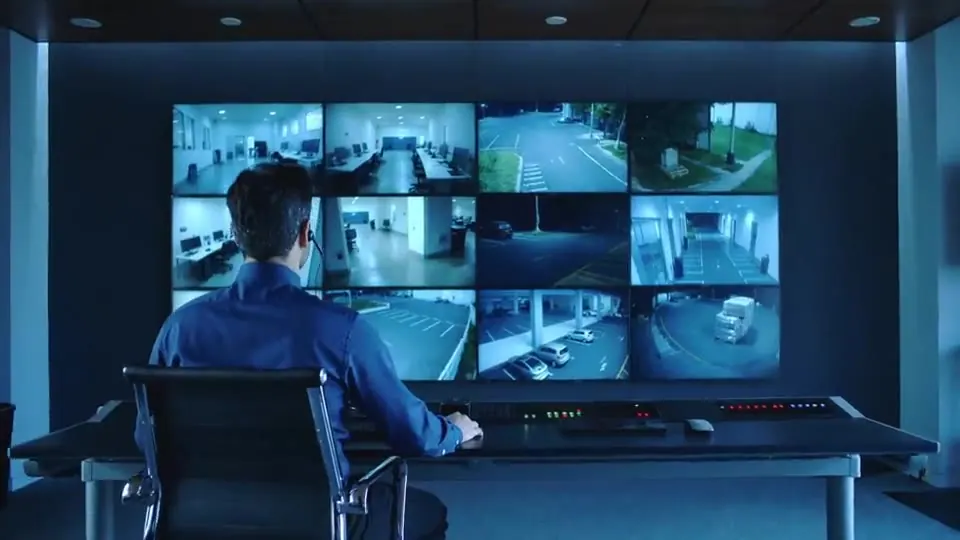
We stitch a site's scattered systems — CCTV, access control, alarms, networks, servers — into a single complex with one control post and end-to-end scenarios.
What's included
Scope of work
- Audit of existing systems and an integration plan
- Unified server platform and virtualisation (H3C)
- End-to-end scenarios: alarm → camera → announcement
- Integration with 1C, time attendance, ERP
- A single monitoring post and operator training
Security and IT system integration in Tashkent
A mature site almost always keeps a zoo: CCTV installed by one contractor, access control by another, alarms by a third, the network grown in-house. Each system works on its own. Together they are silent: the guard watches five monitors running five applications, one event has to be assembled from three logs, and the question of who left the warehouse at 2:40 takes an evening instead of a minute.
Integration stitches the systems into end-to-end scenarios, and the abstraction quickly becomes concrete. An intruder sensor fires — the nearest camera appears on the post monitor by itself, the event is stored with video confirmation. The fire alarm goes off — escape doors release, lifts descend, the PA reads the floors in order. An employee taps a card — the pass lands in the timesheet and in 1C, lateness computed without HR.
Technically it runs on open protocols: ONVIF for video, OSDP for access control, Modbus for building services, vendor APIs for the rest. That is why most of what already stands can be integrated — without replacing working equipment. After the audit we split the list honestly in three: what links directly, what needs a gateway, and what is cheaper to replace than to befriend.
The foundation of a unified complex is the server platform. We build it on H3C hardware with virtualisation: critical services live in a redundant cluster, archives on RAID arrays, power behind UPS. As an H3C partner in Uzbekistan we cover this part end to end, from server supply to failover configuration. A unified system does not mean a single point of failure — that is a design principle, not a slogan.
A separate layer is the link to business systems. Access passes flow into time attendance and 1C, the weighbridge records trucks tied to video, building services report faults to the common post. A pile of sensors and cameras becomes a management tool: data you can trust because the picture confirms it.
We work in stages and without stopping the site. First the audit and a map of existing systems, then a pilot on one section — a checkpoint, a floor, a workshop — where the scenarios are proven live. Only then the roll-out. This order removes integration's main fear: breaking what works. We won't — that is what the pilot is for.
The result is easy to measure. One post instead of five monitors. One event log instead of three. Predictable behaviour of every system in an emergency — written into scenarios, not dependent on which guard is on shift. The audit and integration plan are free; we work across Tashkent and all of Uzbekistan.
Typical solutions
Three levels of system integration
Every site is priced individually: describe the task or send a plan — we will return a quote with an exact estimate within one business day.
Linking two systems
Office, store, clinic
- Access + video: every entry confirmed by a frame
- Fire alarm releases the doors
- A single event log
- Runs on existing equipment
Time: from 1 week
A single guard post
Business center, plant, logistics
- Video, access and alarm in one interface
- Alarm response scenarios
- A role model for operators
- A pilot area before the rollout
Time: 3–6 weeks
Integration with business systems
Large site, branch network
- Entries flow into 1C and time attendance
- A redundant server platform
- Unified reporting across branches
- An audit and system map before the start
Time: per design
How we work
From audit to a single post — 5 steps
System audit
a map of what is already installed — free
Integration plan
what links directly and what via a gateway
A pilot area
scenarios proven live
Site-wide rollout
without stopping working systems
Handover and service
operator procedures, training, support
Equipment
Open protocols and proven platforms
Hikvision, Dahua, ZKTeco, Bolid, MikroTik, H3C — linked via ONVIF, OSDP and vendor APIs, with equipment supplied by us.
Equipment we install



Examples
Gallery
How we work
SAT Solutions terms of work
Installation work is covered for 3 years; equipment for 1 to 3 years per the manufacturer. Warranty visits within one business day.
3 engineers and 15 installers on staff, no subcontractors. We work in Tashkent and across Uzbekistan.
Site visits in Tashkent are free and happen on the day you call. Regions by arrangement.
After the survey we prepare an estimate and a commercial proposal within one business day. No obligation.
Contract with a legal entity, invoice, VAT-compliant billing, acceptance acts and as-built documentation. We also work with private clients.
Security systems installation — National Guard of Uzbekistan licence No. 1554491. Fire alarm and evacuation systems — Ministry of Emergency Situations licence No. 913518. View licences
Questions & answers
Frequently asked questions
What does integration add over separate systems?
Can different installed brands be combined?
Do you link access control to time attendance and 1C?
What about resilience?
Start a project
Need system integration?
We'll select equipment for your site and send a quote within one business day.