In short
- An alarm protects by triggering at the perimeter before entry and reporting even when power and internet have been cut.
- A professional radio link is two-way and encrypted (AES-128 on AX PRO), and the panel supervises every detector.
- A battery in the panel and a backup 4G channel make sure the alarm goes out without mains power or home internet.
- Protection rests on opening and glass-break detectors on the perimeter plus motion detectors inside; a camera detector confirms the alarm with a photo.
- A private-house kit on AX PRO with a camera detector and outdoor siren costs about 4.5 million UZS for hardware at 30.10.2026 prices.
How an alarm system works
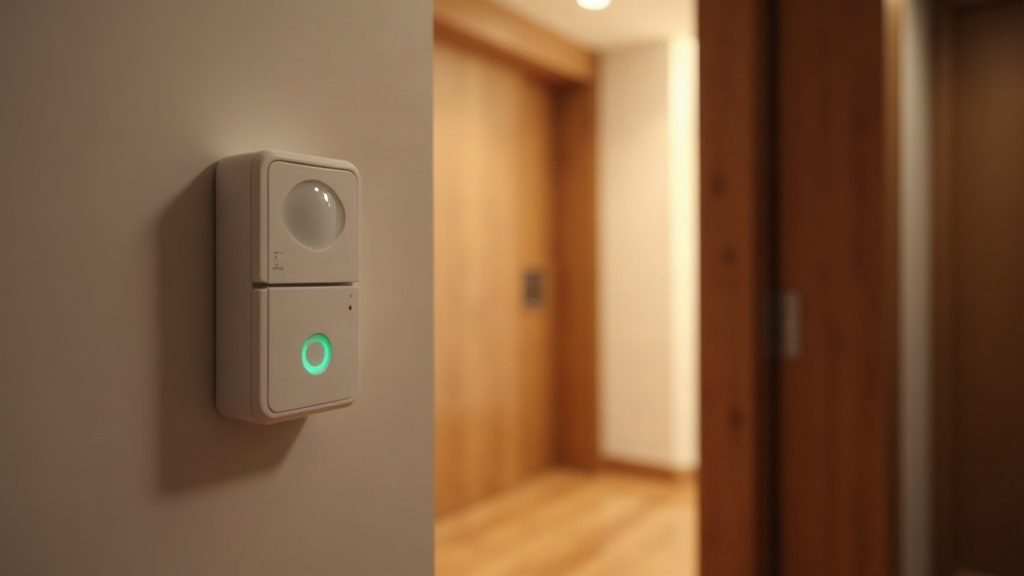
Every alarm consists of detectors, a control panel and notification channels. Detectors register a door opening, movement in a room or the sound of breaking glass; the panel decides whether it is an alarm and reports it: it sounds the siren, sends a notification to the app and, if required, passes the signal to a security company.
The panel knows the arming mode. When you leave, you arm the whole house; at night, a partial mode keeps door and window detectors active while bedroom motion detectors are off; when you come back, you disarm with a key fob, card or the app. Getting the modes right is half the value: people stop arming a system that gets in their way.
Security Alarm Systems in Tashkent: Home, Office, Warehouse →
The radio link: what separates protection from a toy
The wireless detectors of a professional system talk to the panel over a two-way, protected radio link. For Hikvision AX PRO the specification lists two-way communication with AES-128 encryption and frequency hopping: the signal cannot be forged or recorded and replayed, and the panel acknowledges every message from a detector.
The panel constantly supervises its link with every detector: if a detector is removed, smashed or its battery runs low, the owner is notified. Cheap GSM kits often work differently: the detector transmits one way and without encryption, and the panel has no idea whether it is still alive. The boxes look alike, but they protect differently.
Communication and power: what if the power and internet are cut
The first thing an intruder may do is cut the power or the internet cable. That is why an alarm panel has a built-in battery and several communication channels. For example, the Dahua AirShield ARC3800H-W2 hub connects over Ethernet and Wi-Fi with automatic failover and has a built-in battery, while the ARC3800H-FW2 model adds a 4G channel via a SIM card.
For a private house a sensible set-up is a main channel over home internet and a backup over the mobile network: even if the router is switched off, the alarm goes out over 4G. Wireless detectors run on their own batteries for years and do not depend on mains power at all.
Wireless, hybrid or wired
A wireless system goes into a finished interior in a day without chasing walls: it is the standard for a flat or an already built house. A wired system uses cabled detectors with no batteries or radio link; it is planned during construction, and for offices and warehouses it is built on panels such as the Bolid Signal-20P, which takes both intrusion and fire loops.
A hybrid combines both approaches in one panel. At Hikvision this is the AX HYBRID PRO line: a wired bus for detectors built into the walls, plus wireless devices where running cable is too costly or too late. For a house where some cable was laid during construction, a hybrid lets you use it and add radio detectors for the garage or summer kitchen.
Which zones and detectors really protect a house
The key principle is to catch the burglar before they are inside. So the foundation is the perimeter: opening detectors on the front door, the yard door and ground-floor windows, and glass-break detectors in rooms with large windows. The second line is motion detectors inside, in the hallway and on the stairs, which nobody can get past.
If there is a dog or cat, pet-immune detectors are used — on AX PRO wireless detectors immunity is rated for a pet up to 30 kg. Outdoor detectors in the yard are placed with care: branches, birds and neighbours’ cats cause false alarms, so the outdoor perimeter is better covered by cameras with a human/vehicle AI filter, with the alarm on doors and windows. Another useful zone is a leak detector in the kitchen and bathroom: it triggers more often than the intrusion detectors.
Confirming an alarm with a photo
The most annoying part of security is false alarms: a detector trips, you are across town and do not know whether to go. A motion detector with a built-in camera solves this: when it triggers, it takes an infrared-lit photo and sends it to the app with the alarm. In the AX PRO line this detector is the DS-PDPC12P-EG2-WB, and there is a colour version.
The second option is to link the alarm with CCTV cameras. According to the manufacturer, the Dahua AirShield hub pulls video from IP cameras on the same network and saves a short alarm clip, and AX PRO works with Hikvision cameras. The owner sees within seconds whether it is a cat or a person and decides whether to call security.
Who responds to an alarm
There are three levels of response. A siren scares and draws the neighbours’ attention, but on its own it does not protect the house — one goes outside in a visible place and one inside, so that staying in the house is unbearably loud. An app notification arrives instantly, but depends on whether you see your phone.
The third level is a contract with a security company: the alarm goes to a monitoring centre and a response team is dispatched. We compared “phone or monitoring” in detail in our article on choosing an intruder alarm. For a home, a combination of siren, app and detector photo is often enough, and monitoring is added when the house is often empty.
What a home alarm costs
Catalogue prices on 30 October 2026, excluding installation: the Hikvision AX PRO DS-PWA64-Kit-WB wireless kit — 2,189,900 UZS; an extra opening detector — 197,900; a pet-immune motion detector — 494,900; a glass-break detector — 395,900; a motion detector with camera — 939,900; an IP65 outdoor siren at 110 dB — 791,900; a leak detector — 419,900. The Dahua AirShield ARC3800H-W2 hub is 1,357,900, the 4G version 2,376,900.
An example for a private house: the AX PRO kit, three more opening detectors for doors and windows, a motion detector with camera and an outdoor siren — about 4.5 million UZS for the hardware. Installing a wireless system in a house usually takes one day, and setting up the app for the whole family is part of the work. Our work carries a 3-year warranty. A calculation for your floor plan can be ordered on our intruder alarm page — we return a quote within one business day.
Product from this article
- Hikvision AX PRO DS-PWA64-Kit-WB wireless alarm kitPrice and specifications in the catalog →
- Hikvision DS-PDPC12P-EG2-WB wireless motion detector with cameraPrice and specifications in the catalog →
- Hikvision DS-PS1-E-WB outdoor wireless siren (IP65, 110 dB)Price and specifications in the catalog →
- Dahua AirShield DHI-ARC3800H-W2(868) alarm hubPrice and specifications in the catalog →
FAQ
Will the alarm work if the power is cut?
Yes, if the panel has a battery and the detectors have their own. Wireless detectors do not depend on mains power, and a backup 4G channel sends the alarm even if the router is off.
Can an alarm be installed without chasing walls?
Yes, a wireless system goes into a finished interior in a day: detectors are fixed to walls and frames, and cable is needed only for the panel’s power.
Will it trigger on a cat or dog?
Pet-immune detectors ignore a pet up to a certain weight — up to 30 kg for AX PRO wireless detectors. They are mounted at the height the manufacturer specifies.
How long do detector batteries last?
Usually years, depending on the model and how often it triggers. The panel warns in advance that a specific detector’s battery is low, so replacement is planned rather than discovered after a break-in.
How is an alarm panel different from smart-home sensors?
An alarm panel supervises its link with every detector, has a battery and backup communication channels, and can pass alarms to a security company. Smart-home sensors are handy for notifications and scenes, but the security job is done by the panel.
Can the alarm be combined with cameras?
Yes: AX PRO works with Hikvision cameras, and Dahua AirShield with Dahua IP cameras on the same network. On an alarm, a photo or short clip arrives in the app.
Installation works cost calculator
Set the number of points — the calculator shows the price range from our standard price list. One minute, no phone calls.
Read also

Related services
Catalog on the topic