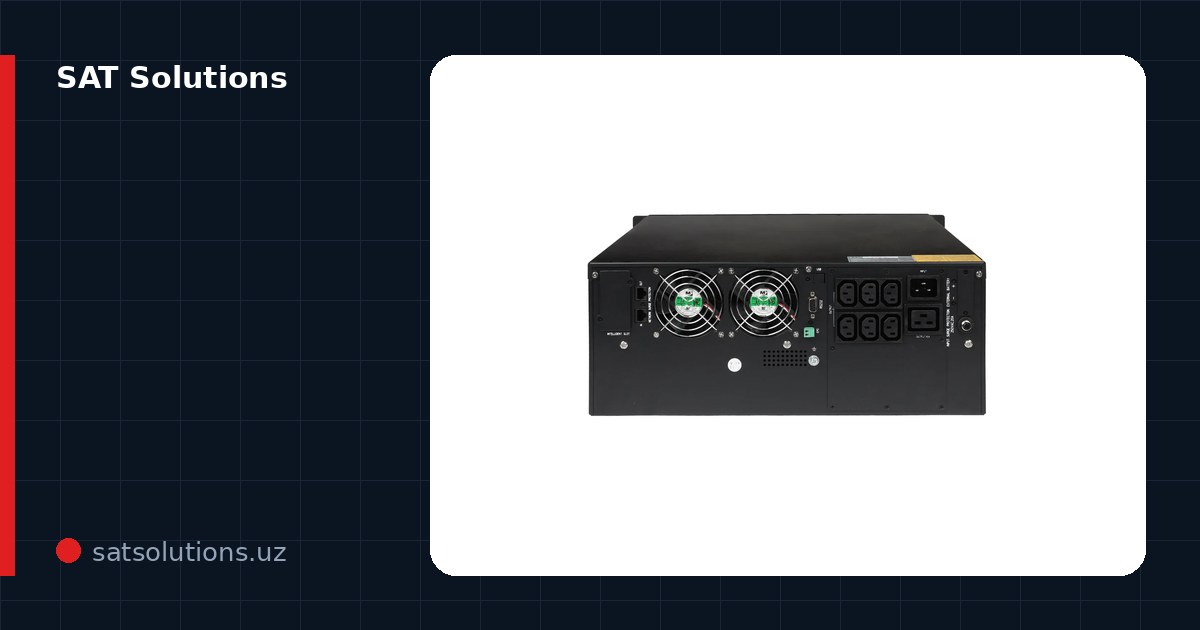
How a UPS differs from a stabilizer
A stabilizer levels the voltage but is helpless during a blackout. A UPS is a battery with electronics: when mains power drops it picks up the load instantly and carries it from minutes to hours depending on capacity. For full protection the two are often paired: the stabilizer absorbs surges, the UPS covers the outages.
There are three UPS types. Standby (off-line) is the simplest and cheapest: it switches to battery in 5–10 milliseconds — fine for a router and simple loads. Line-interactive adds an autotransformer and rides through sags without draining the battery — the standard for computers. Online (double conversion) feeds the load through the inverter permanently: zero transfer time and a perfect sine wave — the choice for server rooms and medical equipment.
VA versus watts: getting the size right
A UPS is rated in volt-amperes (VA) while your equipment consumes watts — and these are different numbers. On a typical UPS the watts are 60–70 % of the VA: a '1000 VA' unit honestly carries 600–700 W. A seller who equates VA and watts is selling you an overload.
Count it like this: add up the watts of everything you will plug in, divide by 0.6 to get the minimum VA, and add 20–30 % headroom — batteries age and loads only grow. A computer with a monitor is usually 250–400 W, so a comfortable UPS starts at 800–1000 VA.
For a computer and home office
A home UPS is not meant to run for hours — it exists to ride out a short outage and let you save your work: a typical 650–1000 VA unit holds a computer for 5–15 minutes. Take a line-interactive model: in sagging grids it does not wear the battery with constant transfers.
A useful detail people forget is the USB port with auto-shutdown: when the battery runs low the UPS gracefully shuts the system down even if you are away. And plug your router into the UPS too: during outages the internet matters as much as the computer, and a router draws just 10–20 W.
For a gas boiler — pure sine wave only
A boiler is a special case: its circulation pump and electronics need a proper sine wave. Cheap computer UPSes output a stepped approximation on battery — the pump hums, overheats and fails, and the boiler's controller throws errors. A boiler needs a pure sine wave UPS, usually one with external batteries.
A boiler draws little — 100–250 W with the pump — but needs hours of runtime: a winter evening outage must not stop the heating. That is why boiler UPSes take external batteries: a pair of 100 Ah units keeps an average boiler running 6–10 hours. Phase polarity matters too — boilers with ionization flame control are sensitive to a 'reversed' socket.
For CCTV and the server room
In CCTV the UPS protects the whole recording node: the NVR, the PoE switch (which also powers the cameras) and the router. Count the maximum: a 16-channel NVR with disks is 40–60 W, the PoE switch carries its cameras' total budget — more in winter with heaters on. The goal is 15–30 minutes of runtime: enough to ride out a typical outage and record what happened while the lights were off.
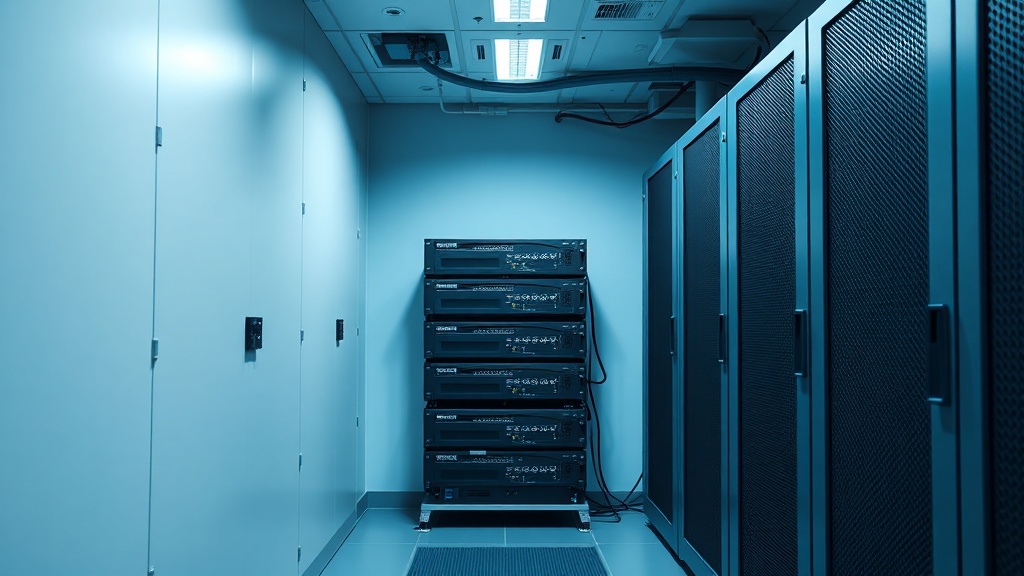
A server room is online-UPS territory: double conversion, zero transfer time, a network monitoring card and automatic shutdown of virtual machines. Runtime is sized not for 'as long as possible' but until graceful shutdown or generator start — usually the same 10–20 minutes, guaranteed at full load.
Batteries, maintenance and selection
Any UPS is first of all a battery, and the battery is a consumable: a typical lead-acid unit lives 3–5 years, less in heat. Every six months it pays to test the runtime by simply pulling the plug: battery degradation is usually discovered at the worst possible moment.
In stock in Tashkent — Pixietech, Vertiv and SNR UPSes: from compact desktop units to rack models for server rooms, plus replacement batteries. Tell us what you are protecting — we will size the power and runtime, deliver and connect it; VAT invoicing for companies.
FAQ
Do I need both a UPS and a stabilizer?
If your grid has both surges and outages — yes, they are different protections: the stabilizer at the input absorbs the sags, the UPS behind it covers the blackouts. In a stable city apartment a line-interactive UPS alone is usually enough.
How long will a computer run on a 650 VA UPS?
An office computer with a monitor (250–300 W) — around 5–10 minutes: enough to save and shut down properly. Running for hours takes a UPS with external batteries — a different class and budget.
Can I connect a boiler to a regular computer UPS?
No: on battery it outputs a stepped signal instead of a sine wave — the circulation pump hums and overheats, and the boiler controller fails. A boiler needs a pure sine wave UPS with external batteries for hours of runtime.
Installation works cost calculator
Set the number of points — the calculator lays out a site plan and shows the range from our standard price list. One minute, no phone calls.
Read also


Related services
Catalog on the topic