In short
- Video intercom types differ by line: four analogue conductors, two conductors of a digital system, IP twisted pair, or the SIP protocol.
- An analogue monitor does not forward calls to a phone; a hybrid kit keeps the 4-wire station and adds smartphone calls.
- A 2-wire system reuses two existing conductors and suits upgrades without chasing walls.
- An IP intercom scales and combines with cameras and access control; SIP lets the door call office PBX phones without a cloud.
- In a flat in an apartment block: a monitor with an interface module, a wireless video doorbell or an IP kit; upgrading the entrance is up to the association or management company.
What any video intercom consists of
Every system is a door station with a camera and a button, an indoor monitor in the flat or house, a lock with its power supply, and a line between them. The difference between intercom types lies in what travels along that line and how: an analogue signal over four conductors, a digital one over two, network packets over twisted pair, or a call over an IP telephony protocol.
The line type decides three things that matter to the owner: whether existing cable can be reused, how many monitors and stations can be connected, and whether a call reaches the phone when nobody is home. Below are five system types in order, from the simplest to the most flexible.
4-wire analogue intercom
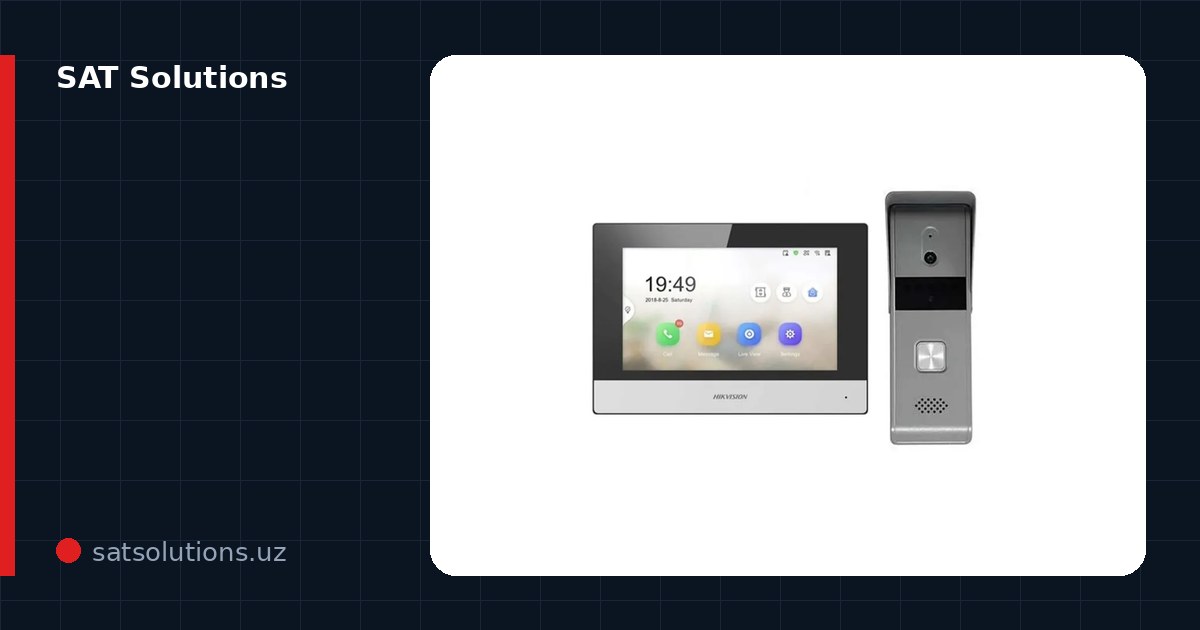
The classic for a private house: four conductors carry station power, audio, video and a common wire. The system works without a network or set-up, the station and monitor connect directly, and modern models transmit HD pictures using HD-TVI. An example is the Hikvision DS-KIS202T kit with a 2 MP station and a 7-inch monitor, from 865,900 UZS.
There is one important limitation: an analogue monitor rings only itself. If nobody is home, the visitor calls into the void — the call does not go to a phone. That is enough for a country house or a home where someone is always in; for people at work all day it is not.
Hybrid: old cable, calls on the phone
A hybrid kit keeps an analogue door station on four conductors, but the indoor monitor joins the home network — over Wi-Fi or cable — and works with the Hik-Connect app. The call reaches both the monitor and the smartphone: you can talk to a courier and open the gate from work. No new cable to the gate is needed.
This is the most common way to replace an old intercom in a private house: the wires are already there, and phone calls are wanted. Our catalogue has the Hikvision DS-KIS302-P from 1,236,900 UZS and the DS-KIS312-P with a 2 MP station from 1,298,900 UZS. Phone calls are set up as for IP intercoms — see our separate Hik-Connect guide.
2-wire digital intercom
In a 2-wire system, power, audio, video and commands all travel over just two conductors: the signal is digitised, and a distributor with a shared power supply feeds it to the monitors. The main advantage is that an existing two-conductor line from an old doorbell or audio intercom can be reused without chasing walls after a renovation. Major manufacturers make 2-wire kits; at Hikvision it is the DS-KIS70x series.
2-wire systems also suit small apartment buildings: dozens of monitors connect to one station through distributors, and modern models can forward calls to a smartphone too. The downside is that one system’s equipment does not mix with other brands, so it has to be extended with the same components.
IP intercom: twisted pair and PoE
In an IP system the station and monitors are network devices connected to a switch with twisted pair, often powered over the same cable by PoE. The number of monitors and stations is almost unlimited, CCTV cameras and access control can be added, and calls go to the monitor, the security desk and smartphones through the manufacturer’s cloud — with no public IP address or port forwarding.
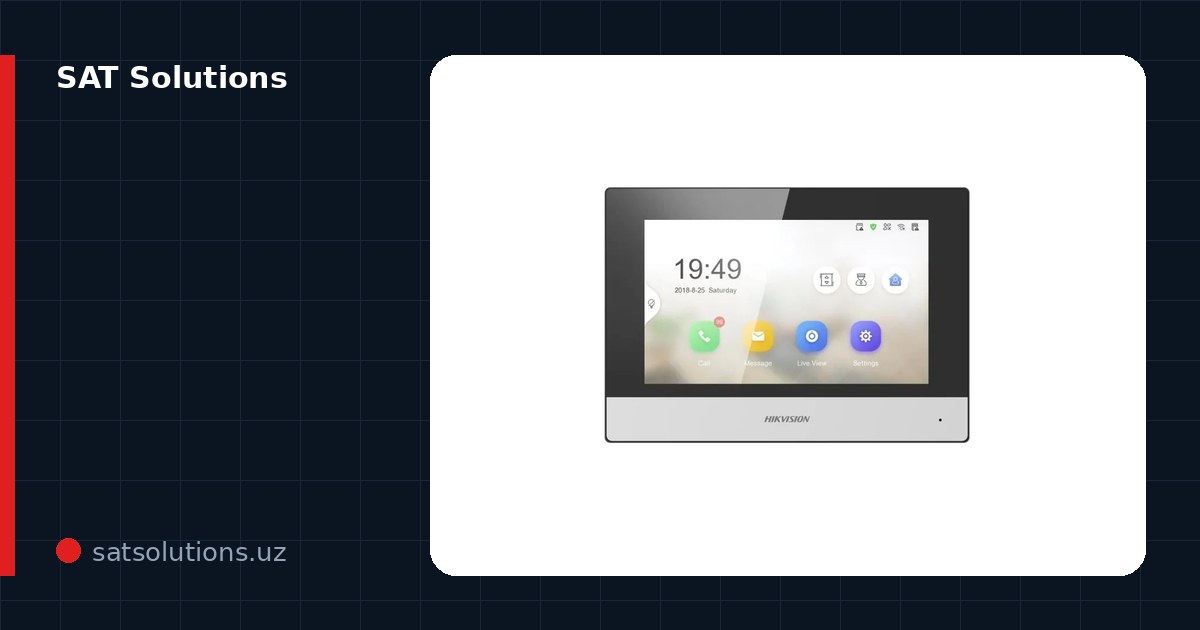
A sample kit for a flat or house: a Hikvision DS-KV6113-PE1(C) door station with a 2 MP camera and card reader — 822,900 UZS, and a DS-KH6320-WTE1 monitor with Wi-Fi and PoE — 964,900 UZS. An IP intercom is the choice for new wiring, a renovation, an office, or a residential complex where scale and camera integration matter.
SIP: the intercom as a phone extension
SIP is the standard IP telephony protocol. A SIP-capable station registers on an office IP PBX or SIP server like an ordinary phone extension and calls any SIP phone, a softphone app on a computer or smartphone, the reception desk or the security post. No manufacturer cloud is needed, and within the local network the call works without internet.
SIP is listed in the specifications of Dahua VTO-series IP stations and, for example, the ZKTeco VT07-B01 monitor; support depends on the model and firmware version, so it is checked before purchase. Offices, hotels and business centres with IP telephony choose this type: a door call reaches the same phones as customer calls. We configure IP PBXs as a separate service.
What you can install in a flat in an apartment block
A flat owner is responsible only for their own door, so there are three options. The first is to keep the building intercom and replace the handset with a video monitor with an interface module: it rings from the entrance panel and shows the visitor if the entrance has a video panel. How to choose a compatible unit is covered in our article on replacing an intercom handset.
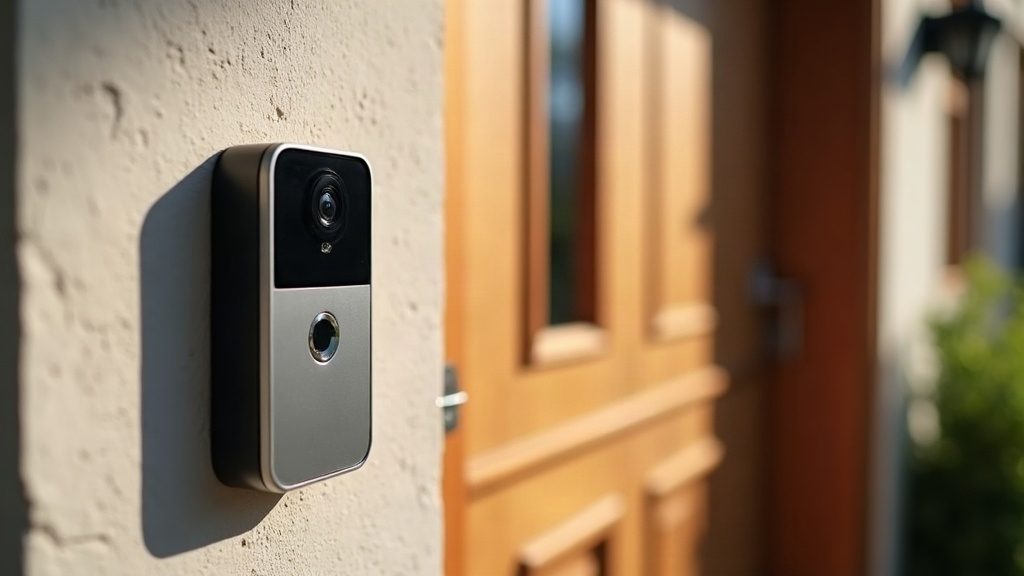
The second is your own station at the flat door. The simplest is a wireless video doorbell: it runs on a battery, records to a memory card and sends the call to your phone; we choose the model to suit the door. It does not open the door — it is a doorbell with a camera, not an intercom with a lock. If you need a lock and a monitor in the flat, an IP kit is installed.
The third is upgrading the whole entrance or building: the decision belongs to the homeowners’ association or the management company. IP systems and 2-wire multi-apartment systems suit this; in new buildings, since 1 May 2026 cameras and intercoms are planned into the project under resolution PP-48 — more in our article on new buildings.
How to choose a type and get calls on your phone
A simple rule: four conductors are in place and you want phone calls — a hybrid kit; there are only two conductors and you cannot chase walls — a 2-wire system; you are renovating, building a house or fitting out an office — an IP intercom; the office already runs an IP PBX — an IP station with SIP support. For a flat without its own station — a monitor with an interface module or a wireless video doorbell.
Calls reach the phone in three ways: through the manufacturer’s cloud app (Hik-Connect for Hikvision, DMSS for Dahua), through SIP to office PBX phones, or through the wireless doorbell’s app. In every case it is worth giving access to several family members or staff, each with their own rights.
We select and install intercoms of all these types on a turnkey basis: station, monitor, lock, line and phone call set-up. Our work carries a 3-year warranty. A calculation for your door, entrance or office can be ordered on our intercom page — we return a quote within one business day.
Product from this article
- Hikvision DS-KIS302-P hybrid video intercom kit (calls on your phone)Price and specifications in the catalog →
- Hikvision DS-KV6113-PE1(C) IP door station with 2 MP cameraPrice and specifications in the catalog →
- Hikvision DS-KH6320-WTE1 IP indoor monitor (Wi-Fi, PoE)Price and specifications in the catalog →
FAQ
Can the old intercom cable stay?
Yes, if the system type matches the line: on four conductors an analogue or hybrid kit is installed, on two — a 2-wire system. IP needs twisted pair.
Does a video intercom work without internet?
The station, monitor and lock work locally without internet. Internet is needed only for smartphone calls via the cloud; a SIP call within the office network goes through without it.
How many phones can receive the call?
In the Hik-Connect or DMSS app, access is given to several users, each with their own rights. Over SIP, the call can be routed to a group of office phones.
How is a video doorbell different from a video intercom?
A video doorbell is a camera with a button and a battery; the call goes only to the app, and it does not open a lock. A video intercom works with a monitor in the flat and controls the door or gate lock.
What happens to the intercom in a power cut?
Without backup power the station and monitor shut down. A power supply with a battery keeps the intercom and lock working during outages; a wireless doorbell runs on its own battery.
Which type should an office choose?
An IP intercom: calls go to reception, the security post and smartphones, and the system combines with cameras and access control. If the office has an IP PBX, choose a station with SIP support.
Installation works cost calculator
Set the number of points — the calculator shows the price range from our standard price list. One minute, no phone calls.
Read also


Related services
Catalog on the topic