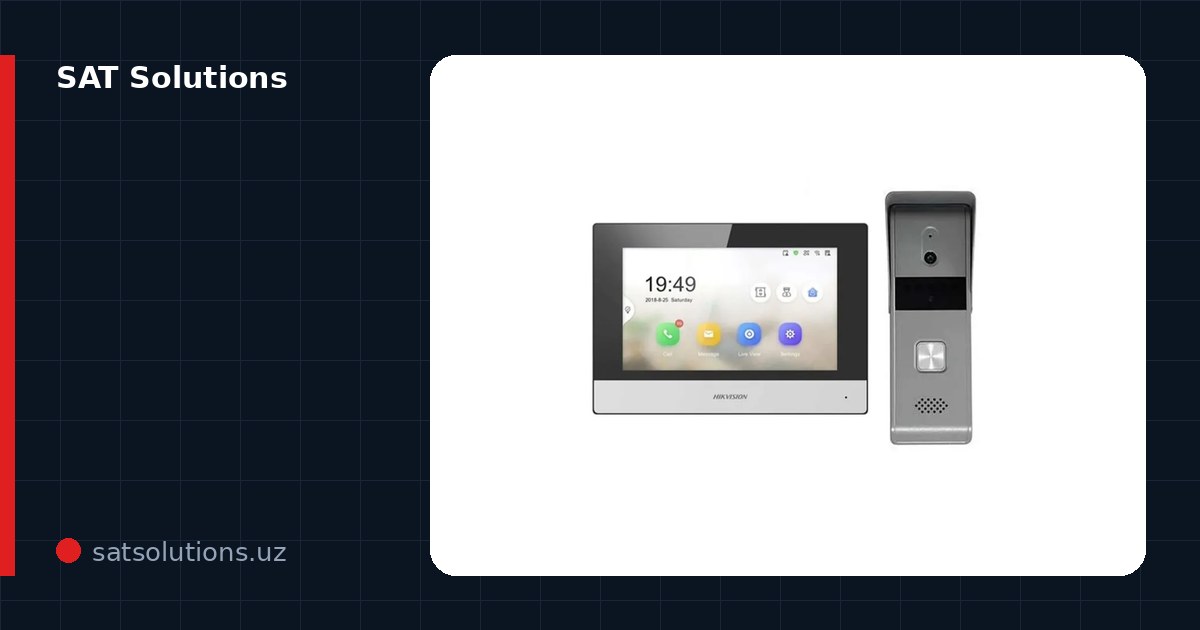
What the kit consists of
A private-house video intercom is four parts: the door station at the gate, the monitor in the house, the lock on the gate and a power supply. Plus the cable between them — and the cable is most often the weak point: the station and monitor connect directly, and the gate can be 20–50 meters away across the yard.
Out-of-the-box 'station + monitor' kits cover only talking and video. Opening the gate is a separate lock with its own power and an exit button on the yard side: plan it into the project from the start rather than 'add it later' — or you will dig up the walkway again for a single cable.
The door station: outdoor duty
The station at the gate lives under sun, rain and frost, so check the ingress protection rating (IP65 and up) and operating temperatures. The second outdoor enemy is backlight: the sun behind a visitor turns the face into a silhouette. Stations with wide dynamic range help, and so does placement — not facing due south.
Choose the viewing angle by task: a narrow one shows the face large, a wide one shows who stands nearby and what happens at the gate. For a house the wide angle (120° and more) is more practical — it partially replaces an entrance camera. A metal body survives hail and curious children alike.
The lock: electromechanical versus magnetic
Nine times out of ten a gate gets an electromechanical lock: during a blackout it stays LOCKED and opens with a mechanical key. A magnetic lock is the opposite — it opens when power fails: a plus for evacuation doors, a security hole for a private gate.
An outdoor lock must be built for outdoors: moisture-protected and tolerant of the gate sag that inevitably develops over time. Fit an exit button on the yard side and a closer right away: a lock that 'almost latched' is not locked at all.
Analog or IP: which fits where
An analog four-wire kit is simpler and cheaper: a station, a monitor, four cores — it works for decades with no network and no configuration. It is enough when 'heard the bell — looked — opened' suits everyone at home.
An IP intercom adds the main thing: the call reaches your smartphone wherever you are — a courier at the gate while you are at work: you see, talk and open. Plus integration with cameras and access control into one system. The price is network setup and internet dependence — though the intercom itself keeps working locally without it.
Cable and power: where people go wrong
The typical mistake is thin cable on a long run: over 30–50 meters weak cores sag the station's power and video picks up noise. Lay cable with cross-section headroom to the gate (separate thick cores for the lock), in conduit, at a depth a shovel will not reach.
Count the lock's power separately from the intercom: an impulse lock draws several times its nominal current at the moment of opening, and a weak power supply sags together with the picture. If gate automation is planned, put its cables into the same trench — digging twice costs more.
Turnkey installation and what we stock
We build private-house intercom systems turnkey: the gate station, the monitor (or two, per floor), an electromechanical lock with an exit button, the run in conduit, and calls set up on the whole family's phones. The engineer's visit is free in Tashkent — we look at the yard and name the exact configuration.
Our Tashkent warehouse holds over sixty intercom items, the backbone being Hikvision's IP line: door stations, monitors, kits. We match the budget: from a simple analog kit to an IP system integrated with cameras and the smart home.
FAQ
Can I open the gate from a smartphone?
Yes — that is the standard IP intercom scenario: the call arrives in the app, you see the visitor, talk and release the lock from anywhere in the world. Analog kits lack this or add it with a separate IP module.
What happens during a blackout?
With an electromechanical lock the gate stays locked and opens with a key. To keep the intercom ringing and opening, add a small UPS to its power supply — the node draws a few watts, so the runtime lasts hours.
Can the station and monitor be 50 meters apart?
Yes: for analog kits that is a standard distance with the right cable cross-section, and for IP it is no issue at all (it is a network). What matters: the outdoor run goes in conduit and the lock gets separate power cores.
Installation works cost calculator
Set the number of points — the calculator lays out a site plan and shows the range from our standard price list. One minute, no phone calls.
Read also
 A resident app for apartment complexes: what changes for tenants and the management company
 Guest passes by QR code: letting couriers and visitors in without calling the dispatcher
 Electronic door lock: magnetic, coded or smart — which to choose
 Face-based time tracking: from the terminal at the entrance to the timesheet in 1C
Catalog on the topic