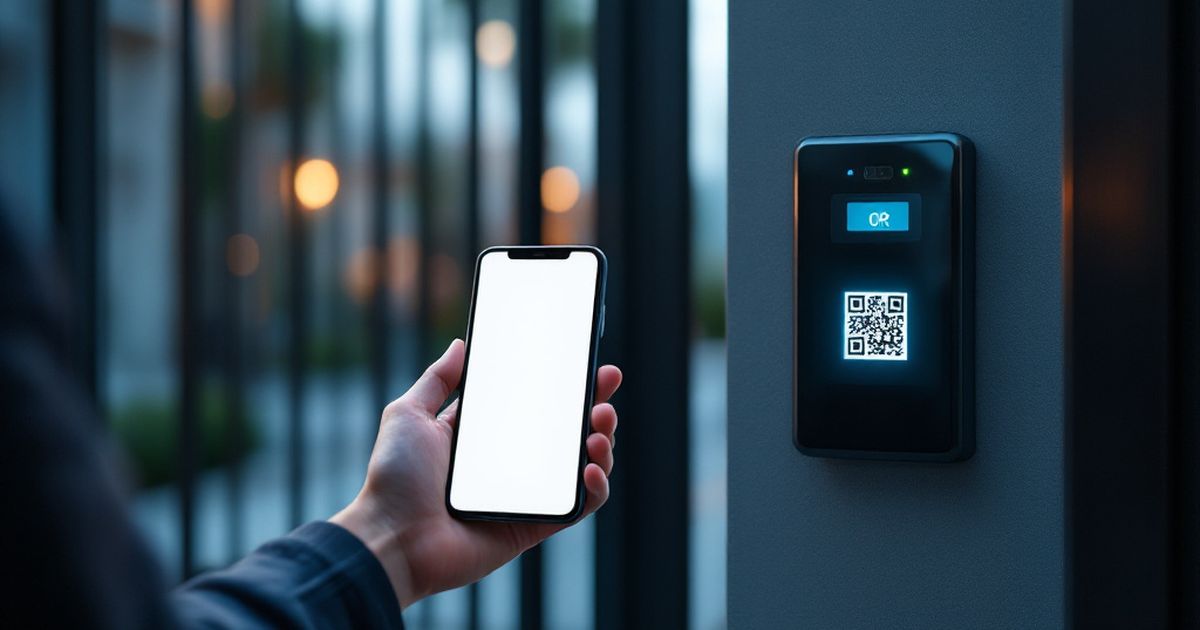
In short
- The resident sends the guest a link with a QR code — no call to the front desk
- The pass works for one visit or for a period and expires on its own
- Every QR entry is visible in the log: who came, where and when
Why door codes and spare fobs fail
The usual way to let a guest into a gated yard is to tell them the code or hand over a spare fob. Neither can be controlled: within a month the code is known across the neighbourhood, and the fob travels between acquaintances and is copied cheaply at any workshop. The management company has no idea who actually walked in — the log only says "card entry".
A single-visit pass works differently: it belongs to a specific apartment, is valid for a limited time and lands in the log together with the name of the resident who issued it. A forwarded link stops working when the time expires, and it can be revoked in one tap.
What the resident and the guest see
In the app the resident creates a pass: who is coming, for how long — an hour, three, eight, a day — or marks it as a single visit. The app produces a link and a QR code that go to the guest in a messenger.
The guest opens the link and sees the pass page: which building it belongs to, until when it is valid and which doors it opens. From there, two options. If the entrance has a terminal with a camera, the guest shows the QR code on the phone screen. If there is no terminal, they tap the door on the page and the server opens it through the building's hardware.
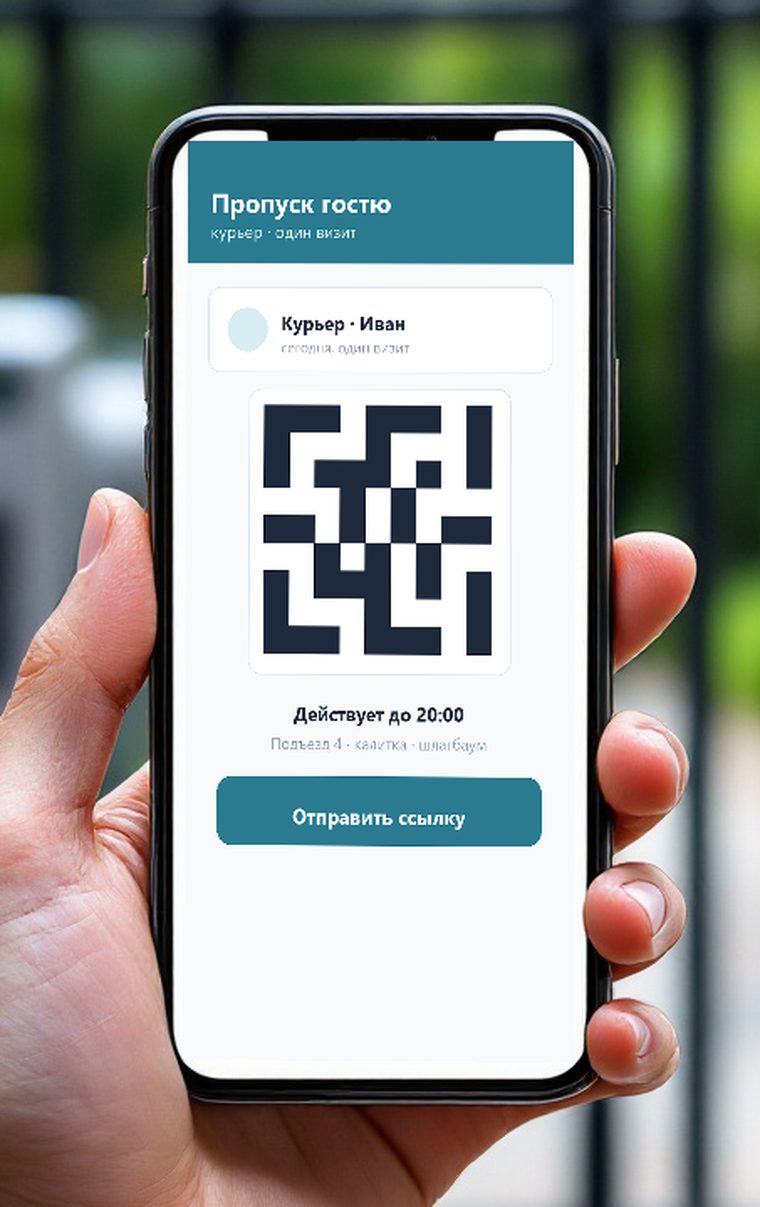
- 1Resident creates a passfor one visit or for a period
- 2The guest gets a linkwith a button and a QR code
- 3QR at the terminalor a tap inside the link
- 4The door opensthe entry is written to the log
What "single visit" means
A single-visit pass matches the usual scenario: the guest has to pass the barrier, then the entrance, and sometimes walk back to the car. That is why it stays valid for another thirty minutes after the first opening and then closes itself.
For a courier that is enough, and for the resident it means the link never becomes a permanent key. A timed pass behaves differently: it lives for the chosen number of hours and fits a renovation crew that comes and goes all day.
What the hardware must support
Opening by link works with any equipment the system controls: intercoms, door and barrier controllers. The decision is made by the server and the hardware receives a ready command.
Scanning a QR code needs a terminal with a reader. On Dahua terminals we switch on QR pass-through: the terminal does not validate the code itself but hands it to our agent, which asks the server and opens the door if the pass is valid. One QR code then works both at the terminal and through the link, while validity and revocation are handled in one place.
What the management company sees
Every guest entry is written to the log: the door, the time, the pass label and the apartment that issued it. Refusals are visible too — for example an attempt to use a revoked or expired pass.
This closes the classic dispute of old systems: who let a stranger in. The answer is in the log within seconds instead of being reconstructed from neighbours' accounts and camera footage.
Rules worth setting from day one
Practice suggests three. First, the single-visit pass is the default for couriers and taxis, while day-long passes are issued deliberately. Second, the barrier and the gate open by pass, while service rooms do not — their rights are configured separately.
Third, the resident is responsible for their guests, and that belongs in the house rules. The technical side is ready — the log is kept, validity is limited, revocation is instant — but order in a building rests on the agreement between the management company and the owners.
FAQ
What if the guest forwards the link to someone else?
The link is valid for a limited time, and a single-visit pass closes thirty minutes after the first entry. The pass belongs to an apartment and every opening is logged, so forwarding does not create permanent access.
Does the guest need internet to open a door?
For the link, yes — the pass page works over the internet. For scanning the QR code at a terminal the guest needs nothing; the building's hardware needs the connection.
Can a pass be revoked before it expires?
Yes, the resident revokes it in the app in one tap. The terminal then stops accepting it, and an attempt to use it is recorded as a refusal.
Does a QR pass work for a car at the barrier?
Yes, if the entrance has a terminal with a reader or the driver opens the barrier by link. Regular cars are better served by number plate recognition, one-off guests by QR.
Installation works cost calculator
Set the number of points — the calculator lays out a site plan and shows the range from our standard price list. One minute, no phone calls.
Read also
Related services
Catalog on the topic