Four types of electronic locks
An electromagnetic lock holds the door by magnet force — 180 to 500 kg. It has no moving parts, so it lasts practically forever, but it needs constant power: power gone — door open. It goes on office and entrance doors paired with a closer.
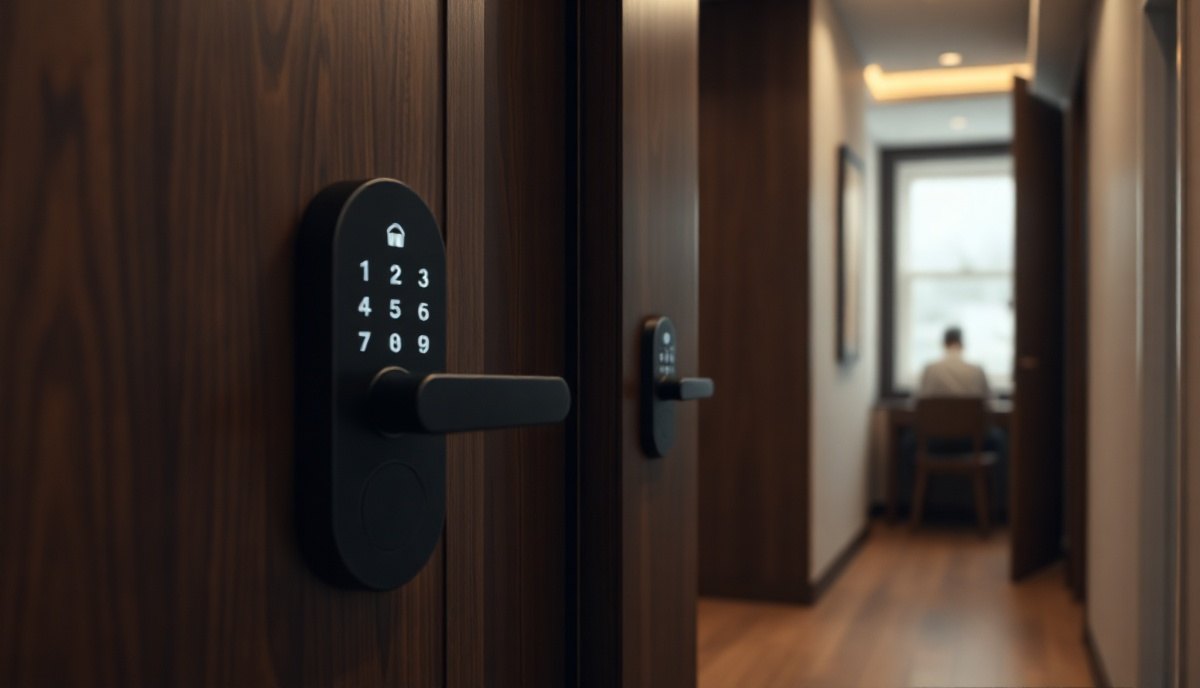
An electromechanical lock is the opposite: locked even without power — the bolt holds mechanically, electricity is only needed to open. That is the choice for gates and doors that must stay locked in a blackout. Coded and smart locks are essentially a control method: a keypad, a card, a fingerprint or a phone app.
What to put on an office, a flat and a gate
For an office door the classic is an electromagnetic lock with a card reader and an exit button: staff pass by card or fingerprint and the log records who entered and when. A server room or a director's office gets a second factor — code plus card.
A flat more often gets a smart lock: phone unlocking, temporary codes for guests, notifications on every opening. An outdoor gate takes a weatherproof electromechanical lock: it survives rain and dust and will not swing open in a blackout.
Lock + intercom + access control: when to combine
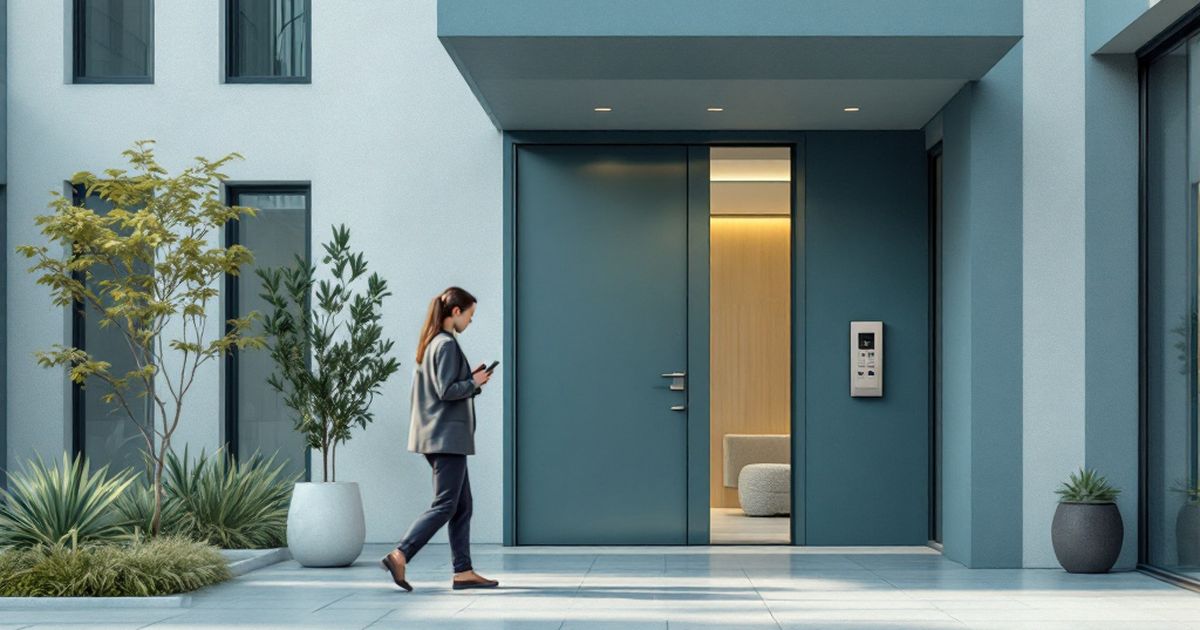
A lock rarely lives alone. Paired with a video intercom it opens from the monitor or the app — you see the guest before the door opens. In office access control every door lock is run by one system: an employee leaves — access is revoked in one click, not by collecting keys.
A code note: on escape routes electromagnetic locks must release on a fire alarm. We always wire locks to the fire alarm where one exists — that is a requirement, not an option.
Power and fire safety
An electronic lock lives while power lives, so a supply with a backup battery is not an option but part of the lock: without it the first outage leaves the door either wide open or shut tight, depending on the type. A magnetic lock opens when power fails — its place is on evacuation routes; an electromechanical one stays locked — it belongs on entrance doors.
The second mandatory link is with the fire alarm: on alarm, locks on evacuation routes must release automatically. This code requirement goes into the design at installation — we do it as standard on every job.
What determines a lock's service life
The service life of an electronic lock depends less on the brand than on operating conditions. Dust and summer heat above +40 °C accelerate wear of the solenoid and the electronics, while a misaligned door forces the bolt to work under strain — failure arrives in six months instead of five years.
Once a year it is worth checking the door closer, leaf clearances, terminal tightness and the state of the backup power battery. Magnetic locks additionally need the armature plate cleaned: a layer of dust cuts holding force by tens of kilograms.
FAQ
What happens to the lock in a power cut?
An electromagnetic lock opens (fail-open), an electromechanical one stays locked (fail-secure). Doors that must always stay locked get electromechanics or a UPS; escape routes must unlock on power loss by code.
How much does an electronic lock with installation cost?
A budget electromagnetic lock with an exit button and installation is the most affordable option; a smart lock or biometric reader costs more. We quote after a short door survey and reply to requests within the working day.
Can the lock be opened from a phone?
Yes — smart locks open from an app, and a lock tied to an IP intercom or access control opens from their apps, including remotely: for instance letting a courier in while you are away.
Installation works cost calculator
Set the number of points — the calculator lays out a site plan and shows the range from our standard price list. One minute, no phone calls.
Read also