
What SCS is and why business needs it
A structured cabling system is a building's unified cable infrastructure carrying computers, telephony, cameras, access control and Wi-Fi. "Structured" means built to a standard: identical outlets, patch panels, labeling, documentation. Any port traces from the workplace to the switch in a minute.
The opposite of SCS is the "historical" network grown over years by different hands: unlabeled wires above the ceiling, switches on bedside tables, nobody knows what goes where. It works — until it does not; and diagnosing any problem becomes archaeology.
Structured Cabling & LAN Installation in Tashkent, Uzbekistan →
Cable category: Cat5e, Cat6 or higher
Cat5e carries gigabit over a hundred meters — enough for the vast majority of offices, cameras and telephony. Cat6 gives headroom: 10 gigabit over short runs and stricter noise margins — a sensible choice for server nodes and new buildings sized for growth. Cat6A and fiber are the league of backbones between floors and buildings.
The rule is simple: horizontal runs to workplaces — Cat5e or Cat6 by budget; backbones — fiber. Overpaying for Cat7 in a regular office is pointless, while saving on copper of dubious origin is a sure way to get a network with "floating" problems even a tester cannot pin down.
Signs of professional installation
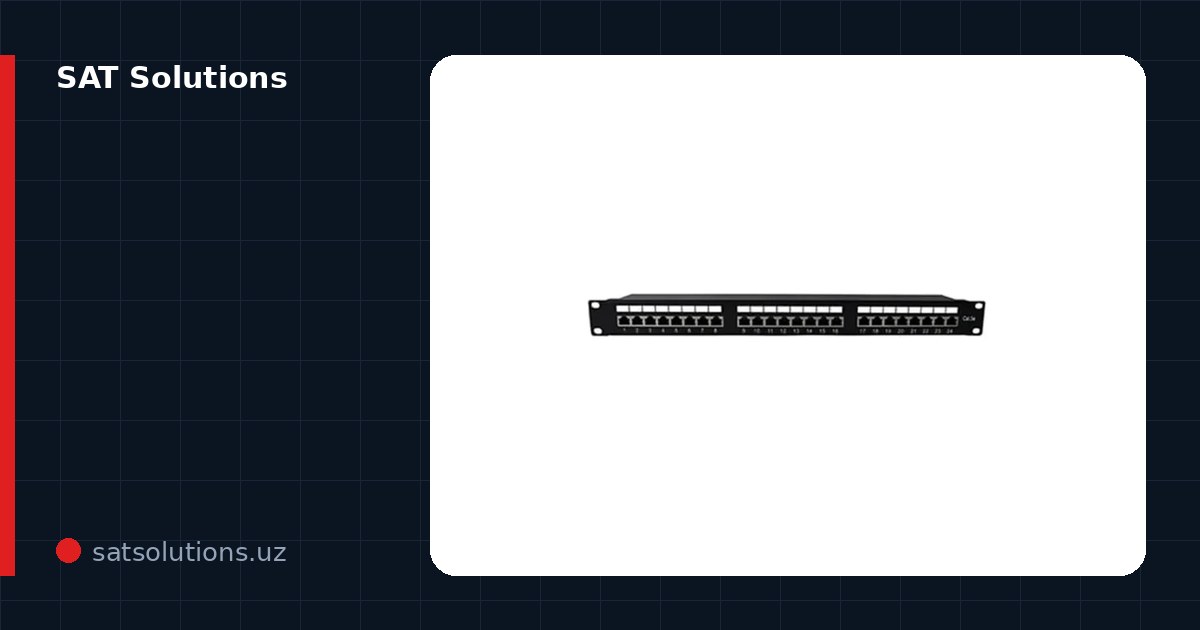
Cable laid in trays and trunking with bend radii respected, low-voltage separated from power lines, every line landed on a patch panel and labeled at both ends. In the cabinet — organisers and neat bundles, not a "beard" of wires. All outlets to one standard, with port headroom for growth.
And above all — documents: every line tested with a cable analyzer, results in a report, and the customer receives a cable journal and route diagrams. Three years later, at an office move or renovation, a new contractor reads the network from paper instead of toning out every wire.
How to order and what it costs
Structured cabling is priced transparently: port count, cable category, route complexity, cabinets and active equipment. A price per point is a workable unit of comparison as long as it states what it contains: cable category, average run length, trunking type, outlet and panel module, line testing and documentation. We survey for free, calculate from the floor plan and hand over an estimate in which the price per point is broken down line by line — only then can it genuinely be compared with other contractors' offers.
We build offices, warehouses and factories across Tashkent and Uzbekistan: new sites during fit-out, working ones without stopping the business, with cutover out of hours. Warranty on lines and work; afterwards, network support from patch cord replacement to standby administration.
Outdoor routes and heat
Between buildings the cable runs in conduit or tray with a UV-resistant jacket: ordinary twisted pair cracks under the Tashkent sun within two or three seasons. Unheated warehouses and rooftops go past +50 °C in summer, so headroom in the temperature rating is planned in advance.
Dust is the second cause of failures: cabinets are specified closed and filtered, and unused ports get blanking caps. Details like these cost almost nothing during installation and save call-outs later.
FAQ
How many ports per workplace?
The standard is two outlets per desk: computer and phone, or spare. Plus dedicated ports for printers, cameras, access points and meeting rooms. A 20–30 % reserve pays off at the first headcount growth.
Can cabling be installed in an office with a finished interior?
Yes: decorative trunking and the space above suspended ceilings and under raised floors are used. Neat, no chasing. The only difference from a construction-stage install is a little more time on the routes.
What is wrong with a network of desktop switches?
A cascade of household switches means loops, bottlenecks and no diagnostics: something is slow somewhere, but where is invisible. SCS with a proper core removes the cascades and makes the network observable.
What is line testing and why do I need it?
A cable analyzer verifies every line: wiring map, length, attenuation, crosstalk. The report is your guarantee the network holds its rated speed — and your evidence in any future dispute with contractors.
Installation works cost calculator
Set the number of points — the calculator lays out a site plan and shows the range from our standard price list. One minute, no phone calls.
Read also



Related services
Catalog on the topic