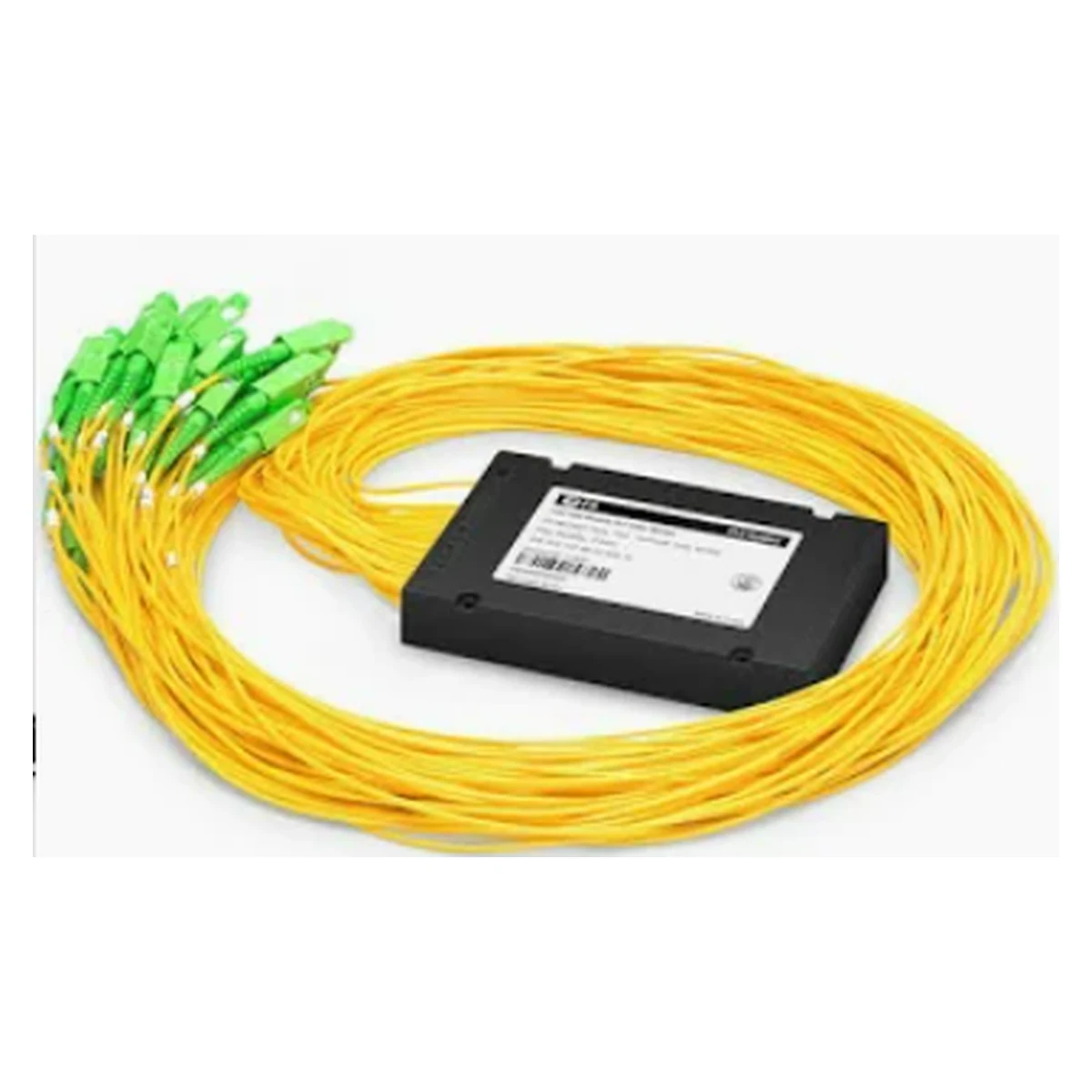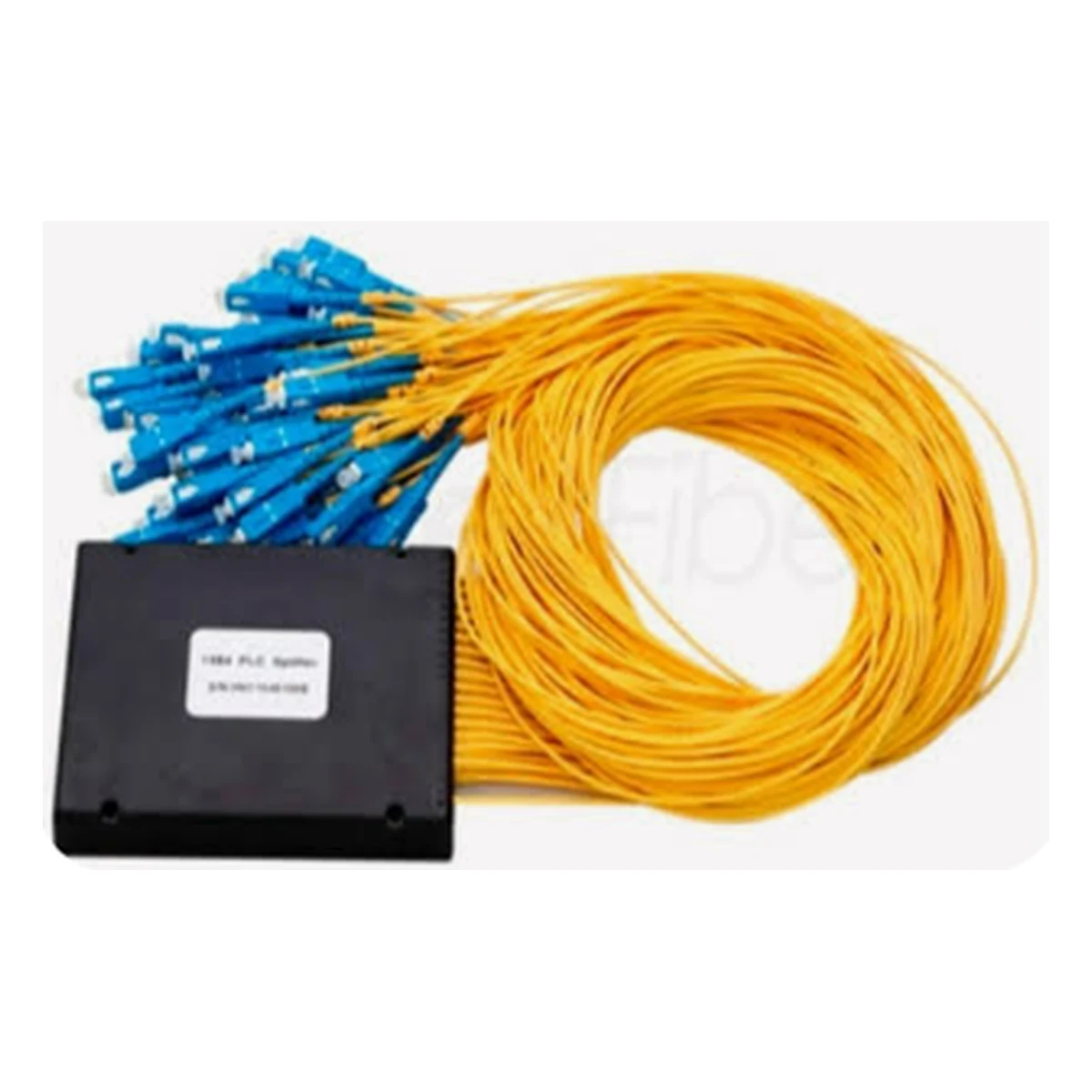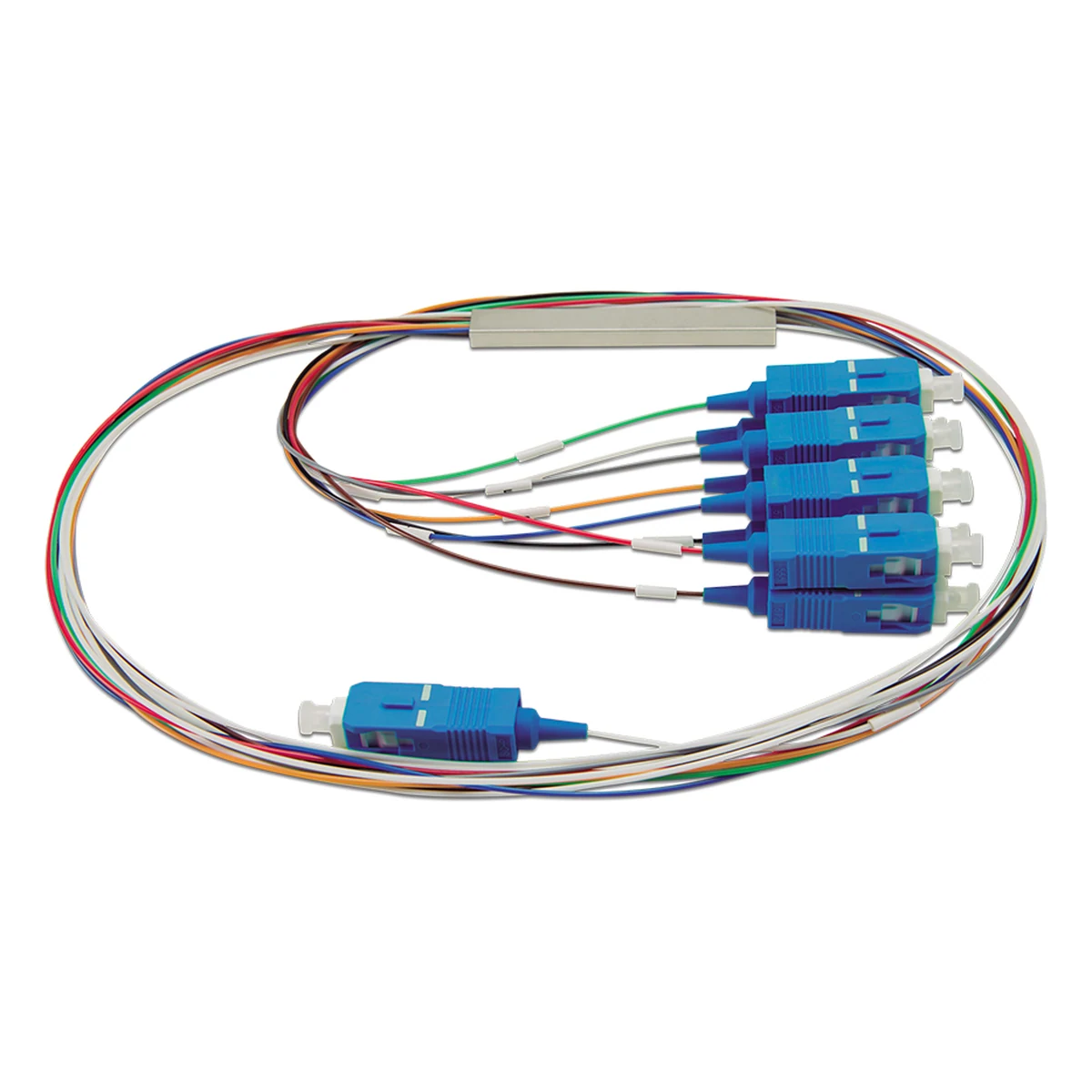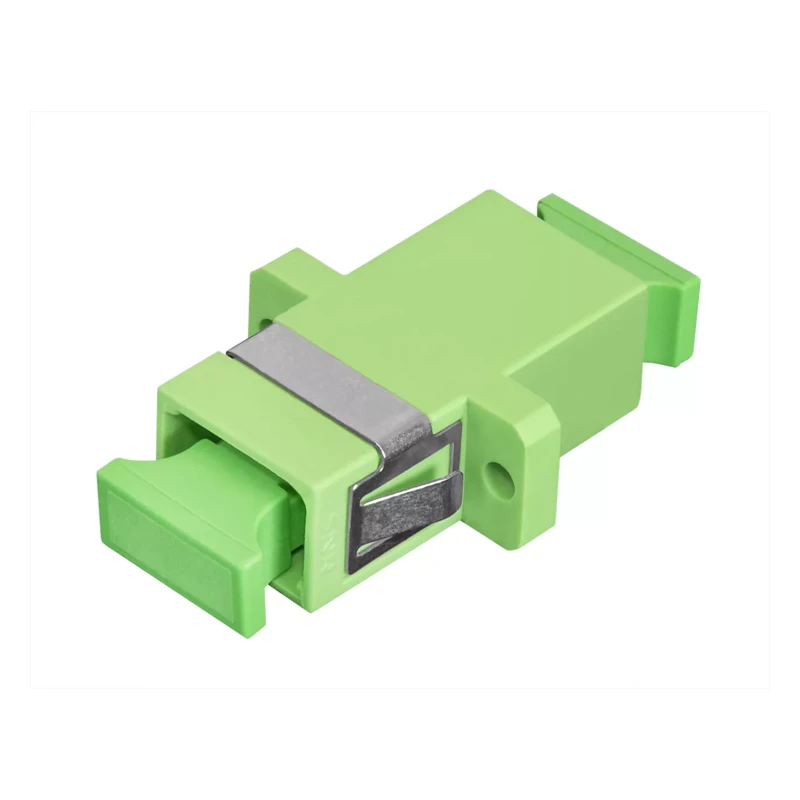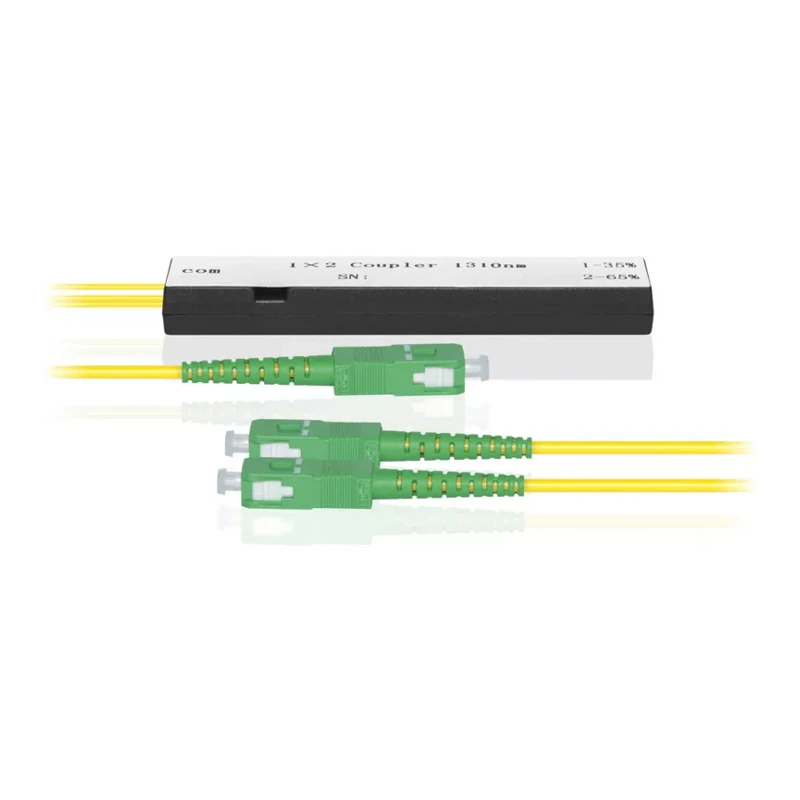
Fused (FBT) boxed optical splitter, dual window (1310/1550 nm), 1×2 20/80, SC/APC
Fused (FBT) housed 1×2 20/80 optical splitter for 1310/1550 nm, SC/APC connectors: insertion loss 7.9/1.3 dB. Taps 20% of the signal while preserving the main flow.
Specifications
- Type
- FBT splitter (fused, housed)
- Connector
- SC/APC
- Part number
- PXT-CPC-1x2-20/80-SC/APC
- Split ratio
- 1×2, 20/80
- Warranty
- 1 year
- Version
- steel tube 3×54 mm
- Wavelength
- 1310/1550 nm
- Insertion loss
- 20% — 7.9 dB, 80% — 1.3 dB
- Operating temperature
- -40...+70°C
Description
The Pixietech PXT-CPC-1x2-20/80-SC/APC optical splitter is a housed fused (FBT) dual window splitter with a 20/80 split ratio and SC/APC connectors. Steel tube housing 3×54 mm; insertion loss at 1310/1550 nm is up to 7.9 dB on the 20% output and 1.3 dB on the 80% output, operating temperature −40…+70 °C. It directs 20% of the input signal to one output and 80% to the other, which is convenient when a more significant tap is needed compared to the 10/90 option, but while preserving the main flow for the main subscriber or node. The housed design protects the optical connections and allows easy integration of the device into a cabinet or cross-connect.
Advantages
- The 20/80 split is suitable for scenarios with a larger tap: connecting an additional node while preserving the predominant power in the main direction
- Dual window support ensures operation on two wavelengths in a single device
- SC/APC connectors reduce back reflections, improving signal quality in PON networks
- The housed design protects the splitter from mechanical damage and simplifies installation
- Stable characteristics provide a predictable loss level in line budget calculations
- A 1-year warranty from Pixietech
Applications
- Passive optical networks with asymmetric signal distribution between nodes
- Connecting additional access points to the backbone optical line
- Optical video surveillance networks with different stream priorities
- Organizing measurement taps in operating optical channels
- Distributing the signal in site and floor distribution cabinets
Frequently asked questions
In which cases is a 20/80 splitter chosen rather than a 10/90?
Does the splitter affect the wavelength of the transmitted signal?
Is a power source needed for the splitter to operate?
Product reviews
Questions & answers