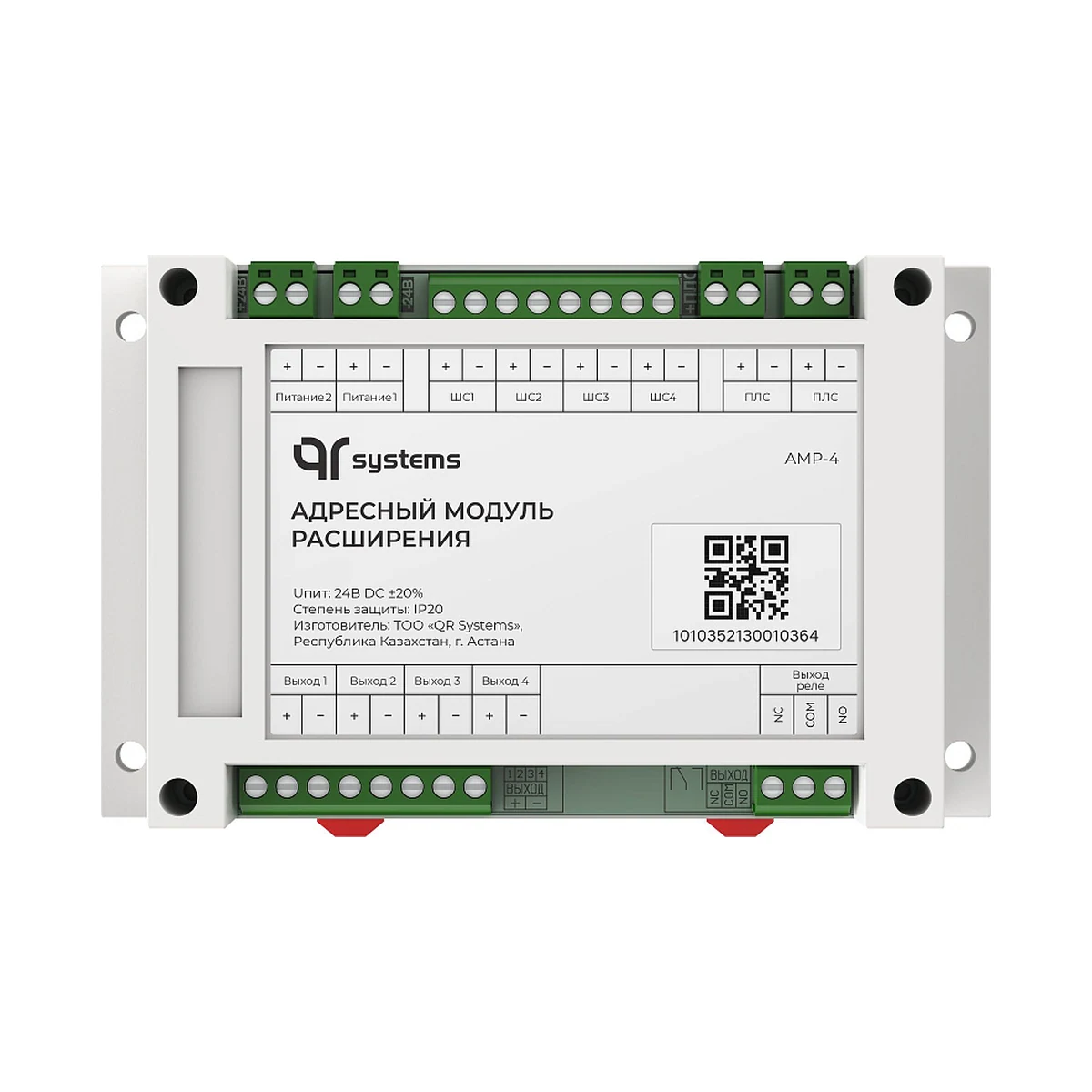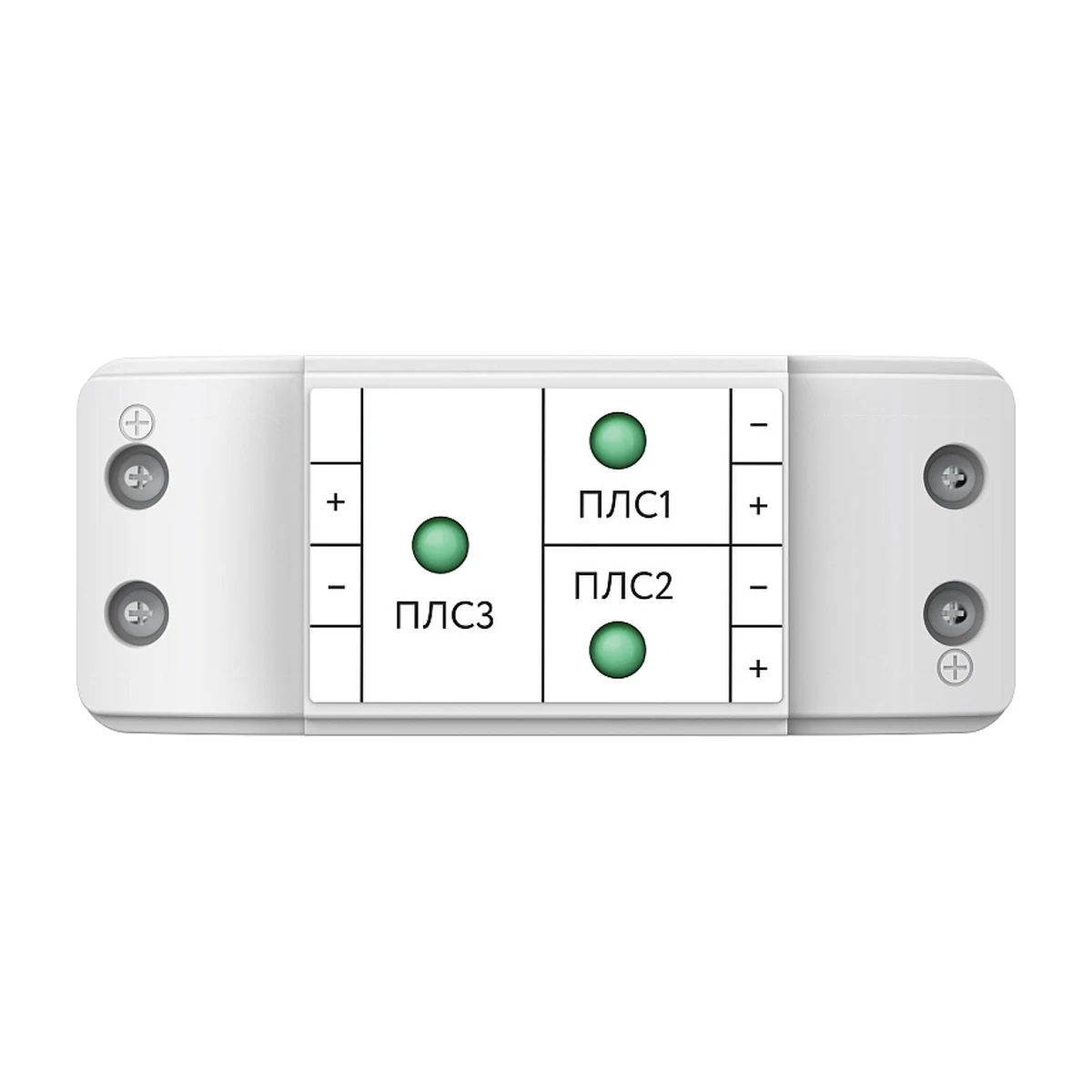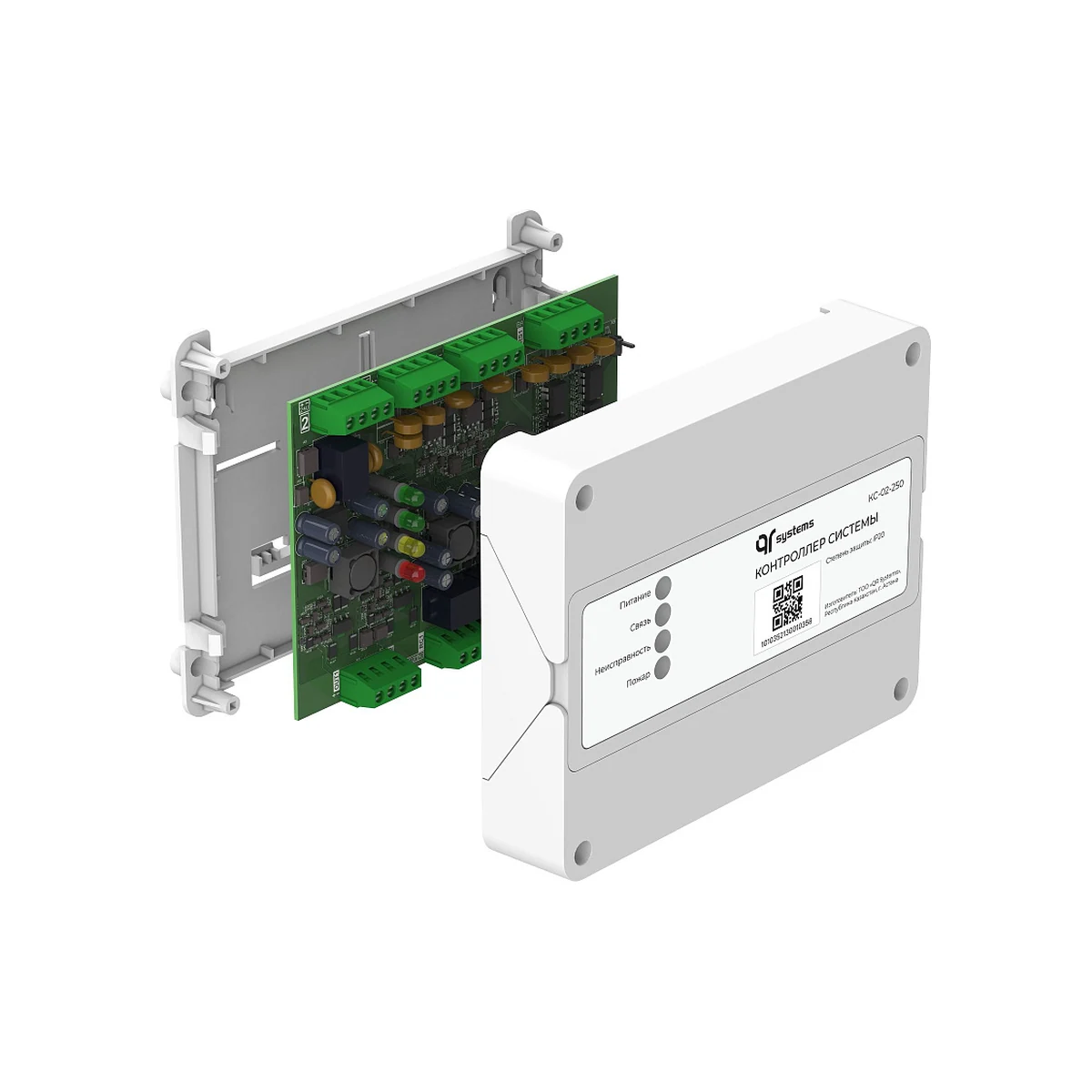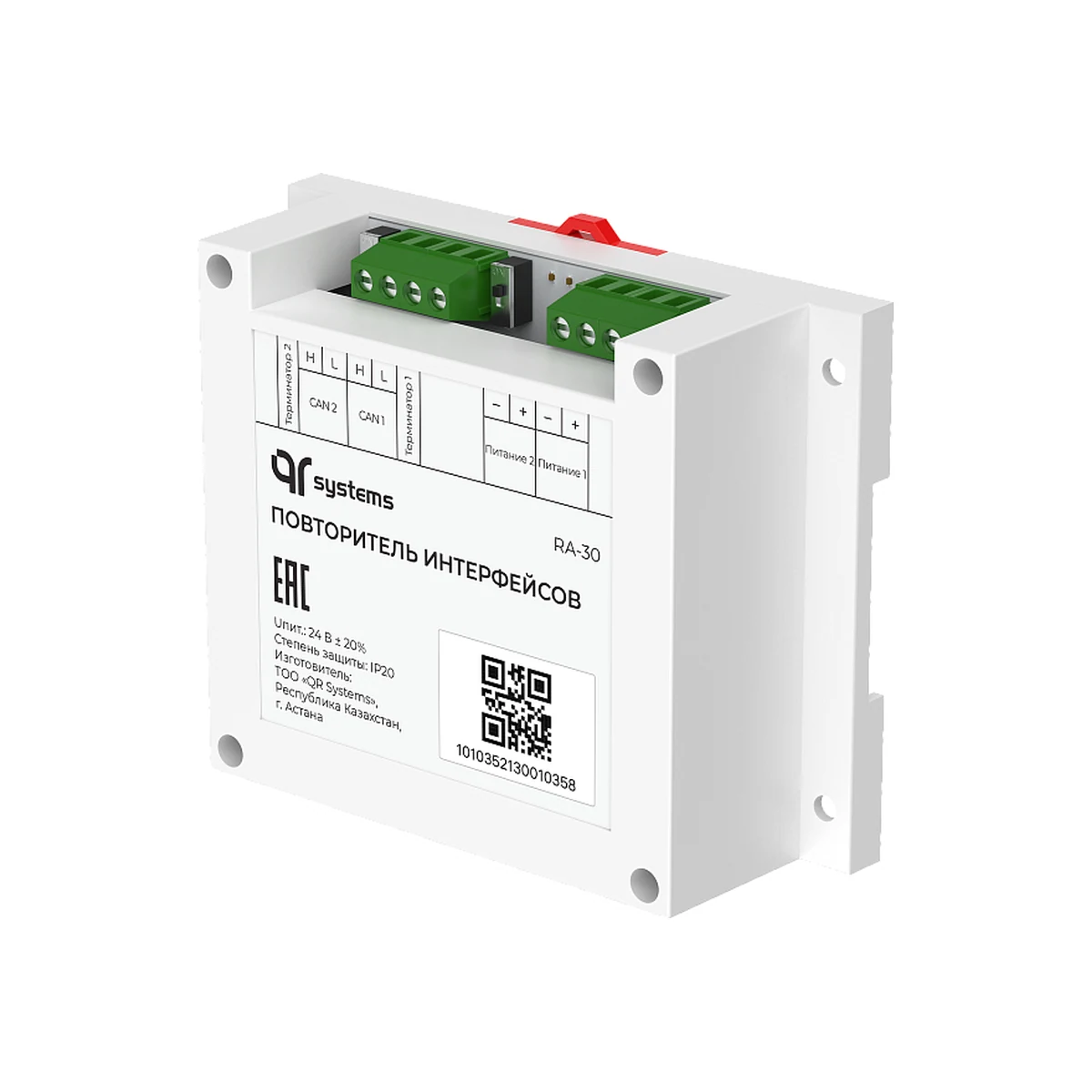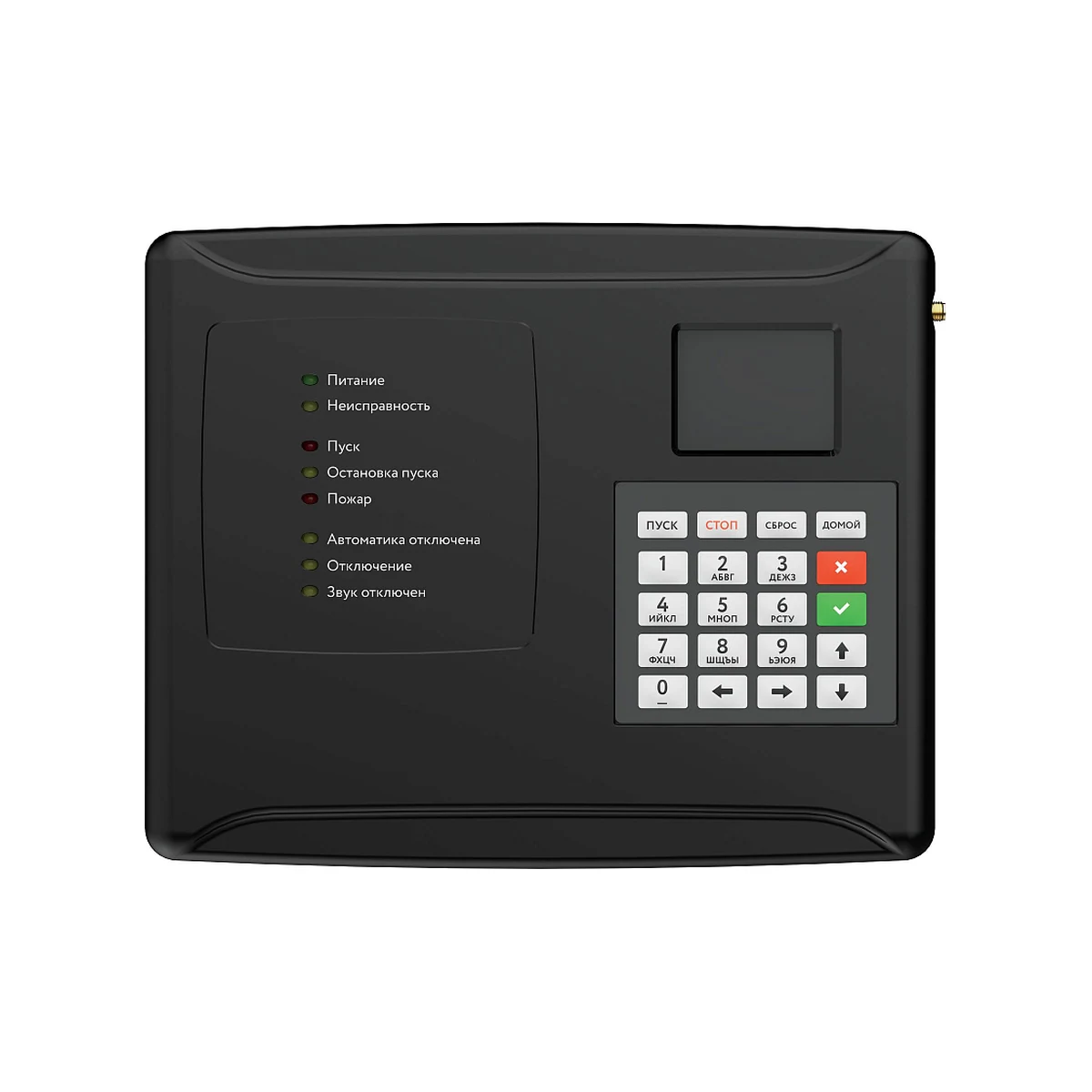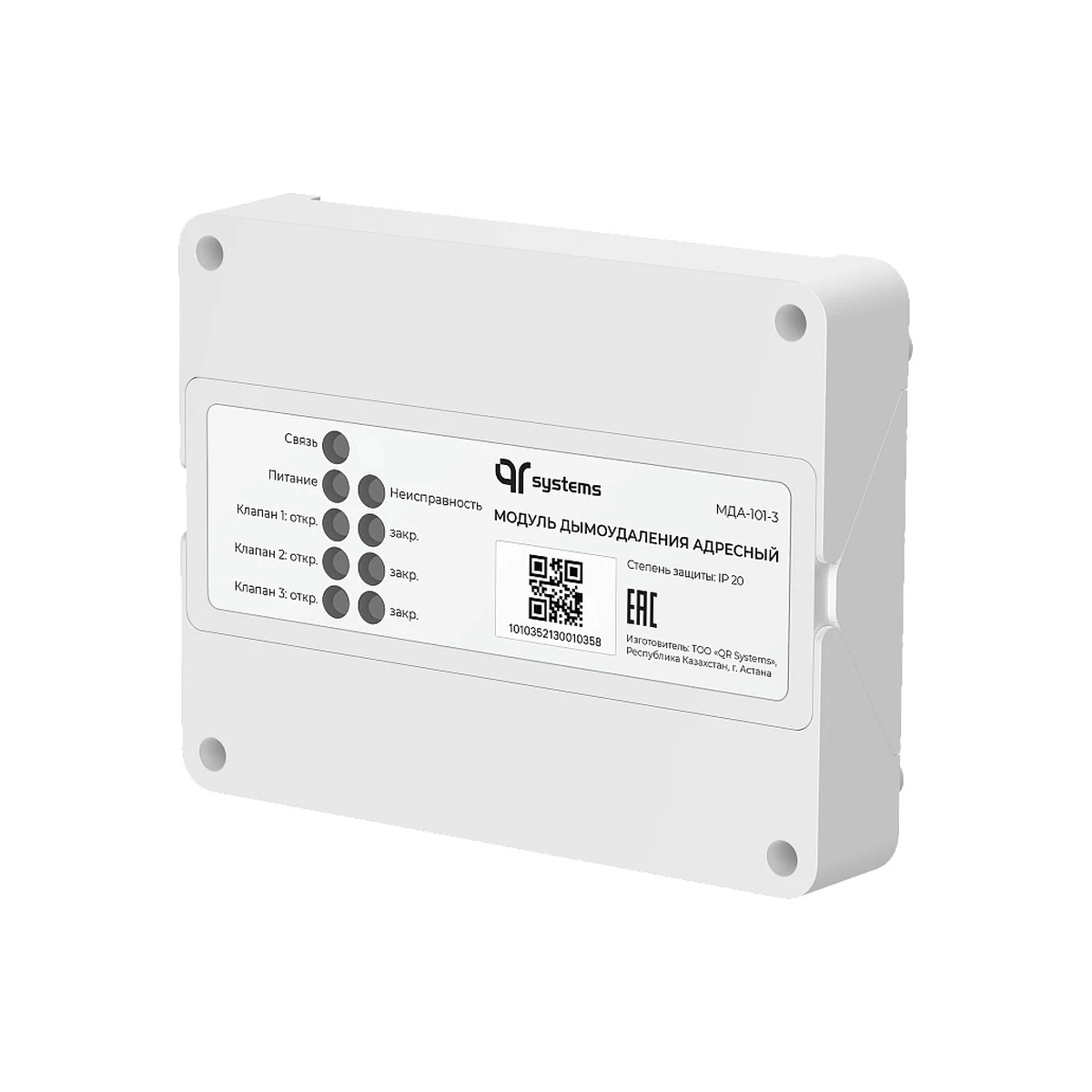
Addressable smoke control module QR Systems MDA-101-3 (3 dampers)
Addressable control module for 3 smoke exhaust or fire dampers: PLS interface, 1 address slot, 24 V or 230 V supply, built-in short-circuit isolator.
Specifications
- Interface
- PLS
- Address slots
- 1
- Dampers
- 3 dampers (smoke exhaust or fire)
- Actuators
- electromagnetic, reversible, spring-return
- Power supply
- AC/DC 24 V ± 10 % or AC 230 V ± 10 %
- Current consumption
- from PLS 0.93 mA (peak 6 mA); output stage ≤ 70 mA at 24 V, ≤ 20 mA at 230 V
- Switched current
- up to 1.5 A at 24/230 V, maximum 2 A
- Operating temperature
- −25…+55 °C
- Housing
- IP20, 160×125×36 mm, max 270 g
- Average service life
- 10 years
Description
The QR Systems MDA-101-3 addressable smoke control module controls the blades of three smoke exhaust or fire dampers within a QR Systems addressable analogue fire alarm system. An electromechanical spring-return actuator, a reversible actuator or an electromagnetic actuator with manual reset connects to the module; the module monitors the damper blade position via limit switches and accepts commands from remote manual control buttons. In automatic mode the module operates on signals from the fire alarm control panel or the system controller over the PLS wired addressable line and occupies one address slot. The limit switch, actuator winding and external button circuits are supervised for open and short circuit, and a built-in short-circuit isolator protects the PLS line. The MDA-101-3 version is designed for three dampers; MDA-101-1 and MDA-101-2 are produced for one and two dampers.
Advantages
- One address slot on the panel — the module takes a minimum of address space
- Three actuator types: electromagnetic, reversible, spring-return — suits different smoke exhaust and fire dampers
- Open and short circuit supervision of limit switch, actuator winding and button circuits — a fault is shown on the panel
- Built-in short-circuit isolator — a short on one section does not stop the whole PLS line
- AC/DC 24 V or AC 230 V supply, switched current up to 1.5 A (briefly up to 2 A) — works with actuators of both supply standards
- LED indication of mode, damper position and link to the panel, plus a housing tamper switch
Applications
- Smoke control systems: operating smoke exhaust dampers on a fire alarm signal
- Fire dampers in building ventilation systems
- Sites with three dampers per zone: offices, shops, small production rooms
- Manual damper operation from remote buttons during maintenance and tests
- Upgrading fire automation on a QR Systems addressable analogue system
Frequently asked questions
How does MDA-101-3 differ from the other versions?
Which actuators can be connected?
How is the module powered and how much does it draw from the line?
Product reviews
Questions & answers