Optical splice tray (economy)
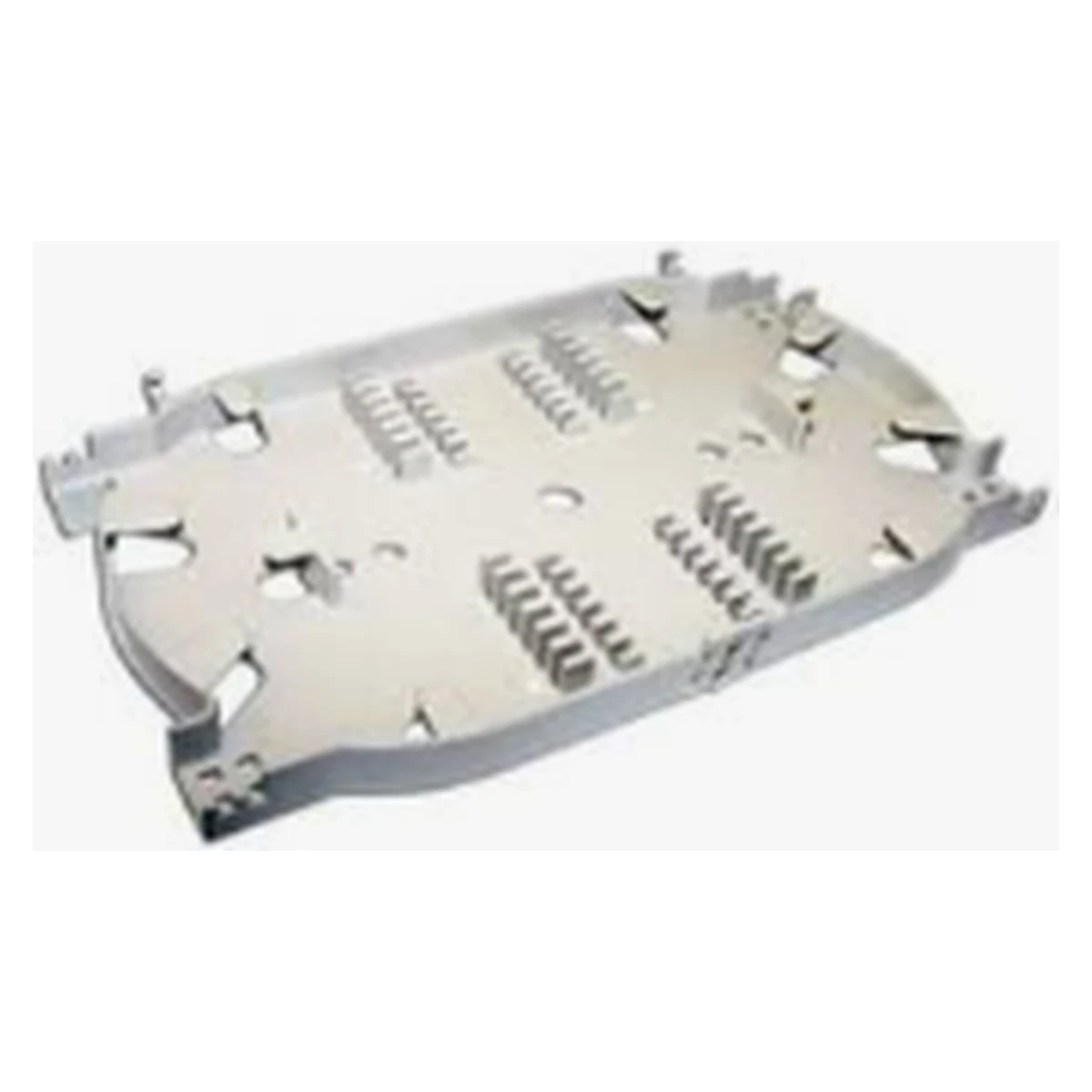
Tray for protecting up to 24 splices and storing slack fiber
Specifications
- Type
- Splice tray
- Lid
- transparent
- Capacity
- up to 24 splice protection sleeves
- Installation
- closures, ODFs, boxes
- Stacking
- yes
Description
The Pixietech optical splice cassette (splice tray) is designed for neat storage of spare fiber and protection of fusion splices in closures, patch panels and distribution boxes. The combs hold up to 24 heat-shrink protection sleeves, the guide channels maintain the permissible fiber bend radius, and the transparent cover shields the routing from dust and accidental contact. It is an essential consumable of any fiber network project: without a tray the fusion splices remain unprotected, and the fiber slack turns into a tangle that cannot be maintained.
The design is made for dense nodes: trays stack on top of each other, increasing the capacity of a closure or panel without replacing the housing. The routing diagram on the cover simplifies documentation — a year later another technician will understand the node without tone testing. The standard form factor allows the tray to be used in most closures, panels and boxes, which simplifies crew supply and unifies the consumables stock.
Advantages
- Up to 24 fusion splices in one tray
- Combs for heat-shrink protection sleeves
- Guides with fiber bend radius control
- Transparent cover — routing inspection without disassembly
- Tray stacking for capacity growth
- Routing diagram on the cover for documentation
Applications
- Fiber closures of backbone and city lines
- Patch panels of stations and server rooms
- FTTH distribution boxes
- Subscriber and floor nodes
Mounting and connection
Work with the tray starts with securing the cable modules at the entry: fibers are routed into the tray with enough slack for future re-splicing. Fusion splices in protection sleeves are laid into the combs in the order matching the diagram on the cover — this disciplines the routing and speeds up finding the right fiber during repair. The fiber slack is distributed along the guides in even loops without crossovers or tension. When stacking, the tray you return to least often — transit fibers — goes at the bottom, and working splices on top. Trays are always in stock at satsolutions.uz in Tashkent together with protection sleeves, pigtails and closures — we will assemble a kit for your project.
Frequently asked questions
How many splices does the tray hold?
Will the tray fit a closure from another manufacturer?
Why a transparent cover?
How much fiber slack should be left in the tray?
Product reviews
Questions & answers